Skip to content
Menu

We earn a commission if you book through this link. You pay the same price.

Search

Seasonal

Turtle Season Runs 1 May to 31 October, and the Lights Rule Is Enforced

Loggerheads nest along Marco's six-mile crescent every summer, and the island's lighting ordinance applies to your balcony as much as to the resort behind it.

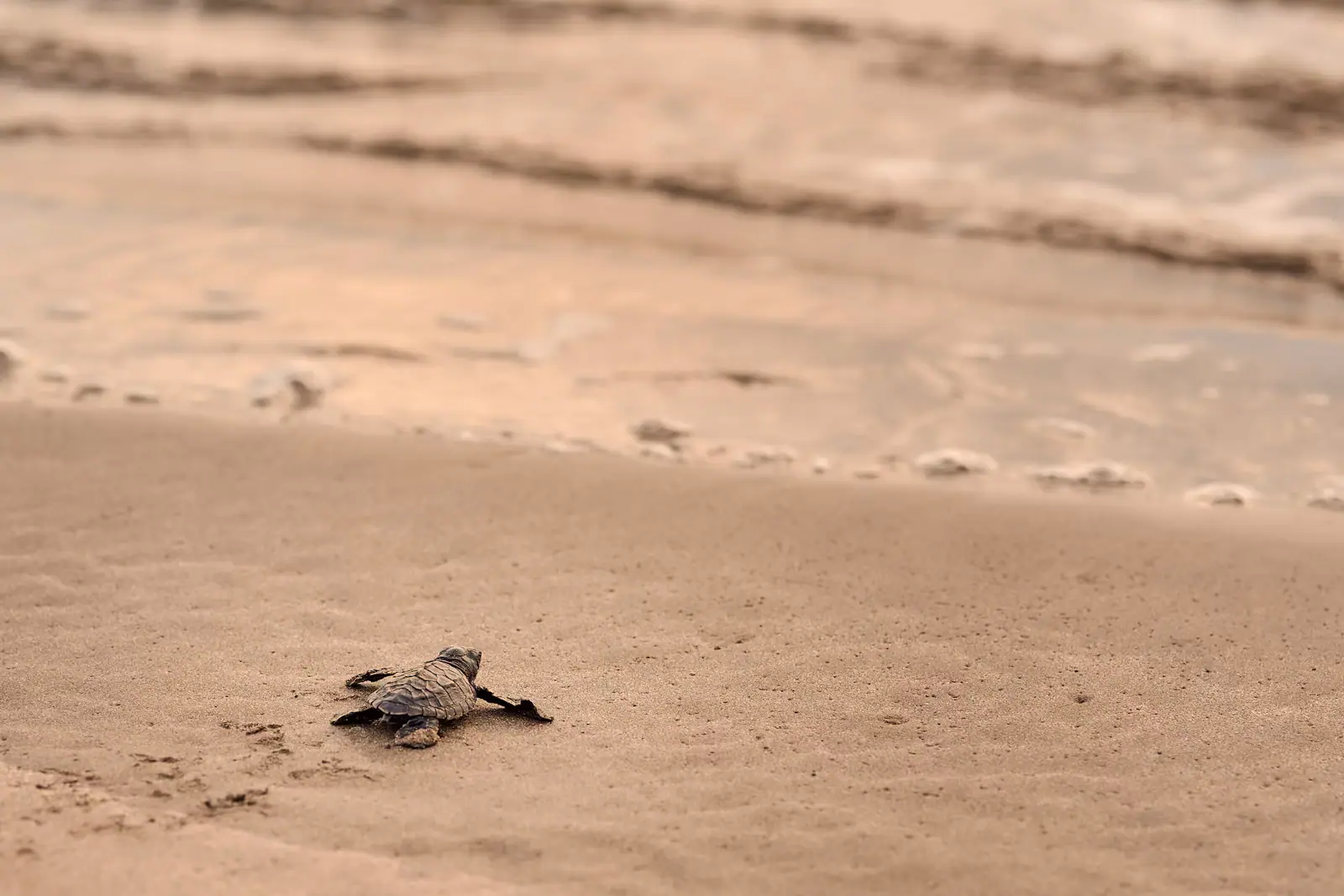
A single sea turtle hatchling crossing rippled sand towards the water

Sea turtle nesting season on Collier County beaches runs from 1 May to 31 October, and Marco Island's western-facing crescent is nesting habitat for its full length. Loggerheads are the main species here.

The rule that catches visitors out is about light. Under Marco's ordinance, lights visible from the beach must be turned off, shielded or otherwise modified after 9 p.m. throughout that window. That is not aimed solely at hotel façades. It covers balcony lights, uncovered windows in beachfront units, and anything on the sand.

The reason is specific rather than sentimental. A nesting female that encounters artificial light frequently abandons the crawl and returns to the water without laying, which is recorded as a false crawl. Hatchlings orient toward the brightest horizon, which for millions of years has been the open Gulf. A lit balcony reverses that, and the hatchlings go inland toward roads and storm drains instead.

Enforcement is real. Marco's ordinance provides for escalating penalties after an initial warning within a calendar year, rising through several hundred dollars into four figures for repeat offences.

What a visitor should actually do

  • Keep balcony lights off after 9 p.m. from May through October, and draw curtains in beachfront rooms.
  • No torches on the beach at night, and that includes phone screens and camera flashes.
  • Fill in every hole you dig before leaving the beach and flatten sandcastles. A hatchling that drops into a hole at night does not climb out.
  • Take beach furniture, umbrellas and toys off the sand overnight. Anything left out is an obstacle on a route that has to work in the dark.
  • If you find a marked nest, leave the stakes and tape exactly where they are.
  • If you come across a nesting turtle or a disoriented hatchling, keep back, keep quiet, keep lights off, and report it to Florida's wildlife authorities rather than intervening.

The same beach that hosts six miles of condominium balconies also hosts a nesting population, and the only reason both work is that people follow a rule they mostly never hear about until they are standing on it.

SourcingSummarised from Collier County's published sea turtle nesting season dates and from the City of Marco Island's beachfront lighting ordinance, including its schedule of escalating penalties. Penalty amounts and ordinance details are set by the city and may be amended; confirm current requirements with the city before relying on this summary, and follow the instructions of any posted sign on the beach.

Plan around it

What this means for visitors

The pages that carry the practical detail behind this story — hours, costs, access and where it sits on Marco.

  • Things to do

    Beaches

    Which Marco Island beach to choose, what the county parking costs, and how to time the wade across Tigertail lagoon to the Sand Dollar…

  • Things to do

    Wildlife

    Marco Island wildlife watching: burrowing owls on residential lots, a long-running dolphin study, manatees after cold fronts and the…

  • Things to do

    Best Time to Visit

    When to visit Marco Island, Florida: the dry season, summer heat, backcountry mosquitoes, hurricane season and red tide, month by month…

  • Things to do

    With Kids

    Marco Island with kids: the wave-free Tigertail lagoon, shelling, short boat trips, the free Calusa museum and honest notes on what does…

Related

Explore Wildlife

This story touches something you can book. These are live listings from our booking partner, not a recommendation attached to the report above.

Some links below go to Viator, our booking partner. We earn a commission on bookings made through them — at no extra cost to you, and with no influence on what we recommend.

Newsroom

More from the newsroom

Who reported this

Nature & Wildlife Editor

Imani covers the estuary behind the condominium towers: Rookery Bay, the mangrove creeks, the shorebird flats at Tigertail and the ground-nesting owls that live on Marco's vacant lots. She worked on nest-monitoring surveys before she wrote about them, and she will say plainly when a wildlife encounter you have been sold is better watched from further away.

Our newsroom is machine-assisted and human-edited: stories are drafted from verified public sources and checked before they publish. How that works is set out in our editorial standards.

More from Imani Brooks