Skip to content
Menu

We earn a commission if you book through this link. You pay the same price.

Search

Ten Thousand Islands

Jet Skis, Parasailing and Watersports

Last updated

Jet ski tours, parasailing and rentals on Marco Island: where to book, Florida's age and licence rules, prices, and the shallow water you need to respect.

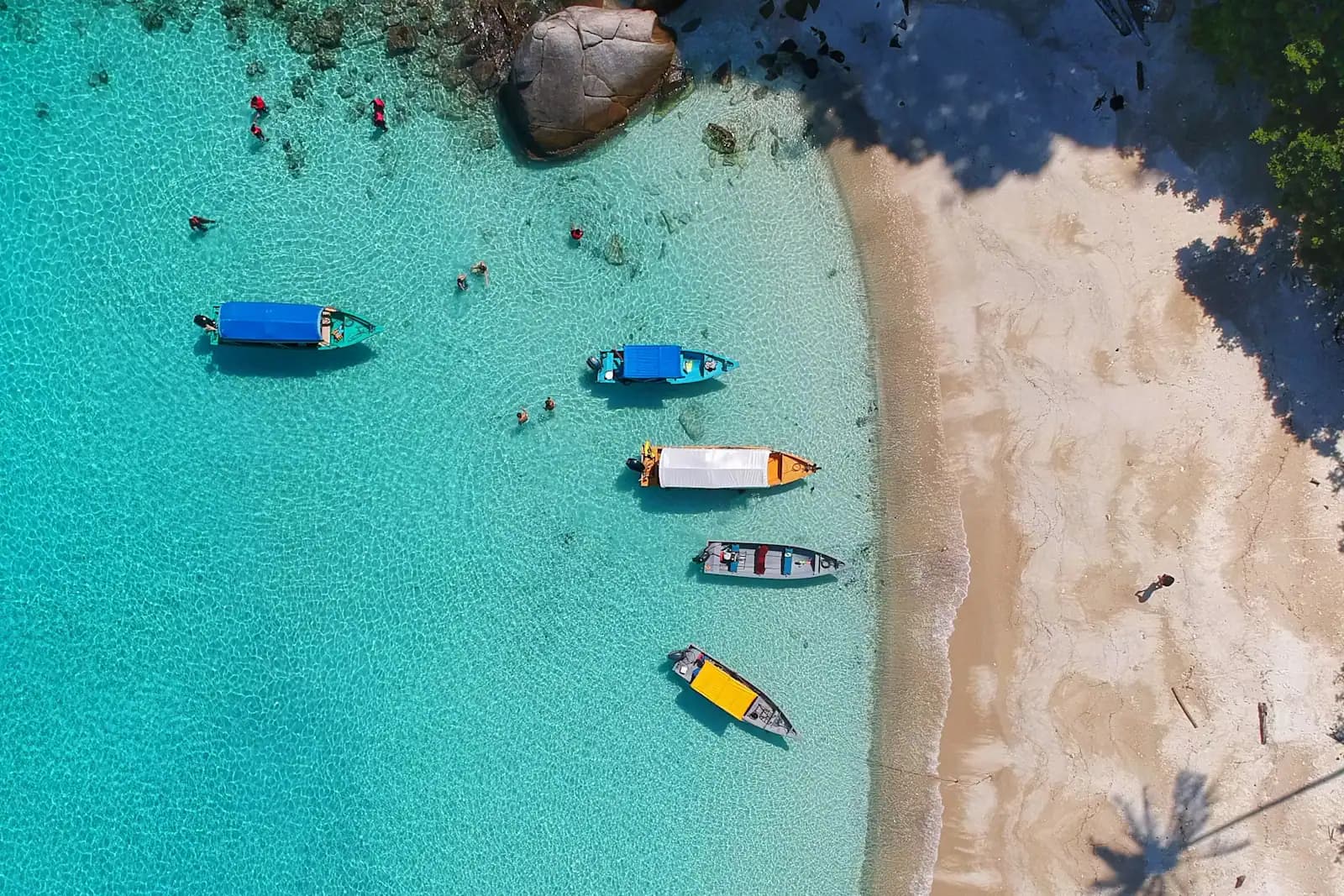
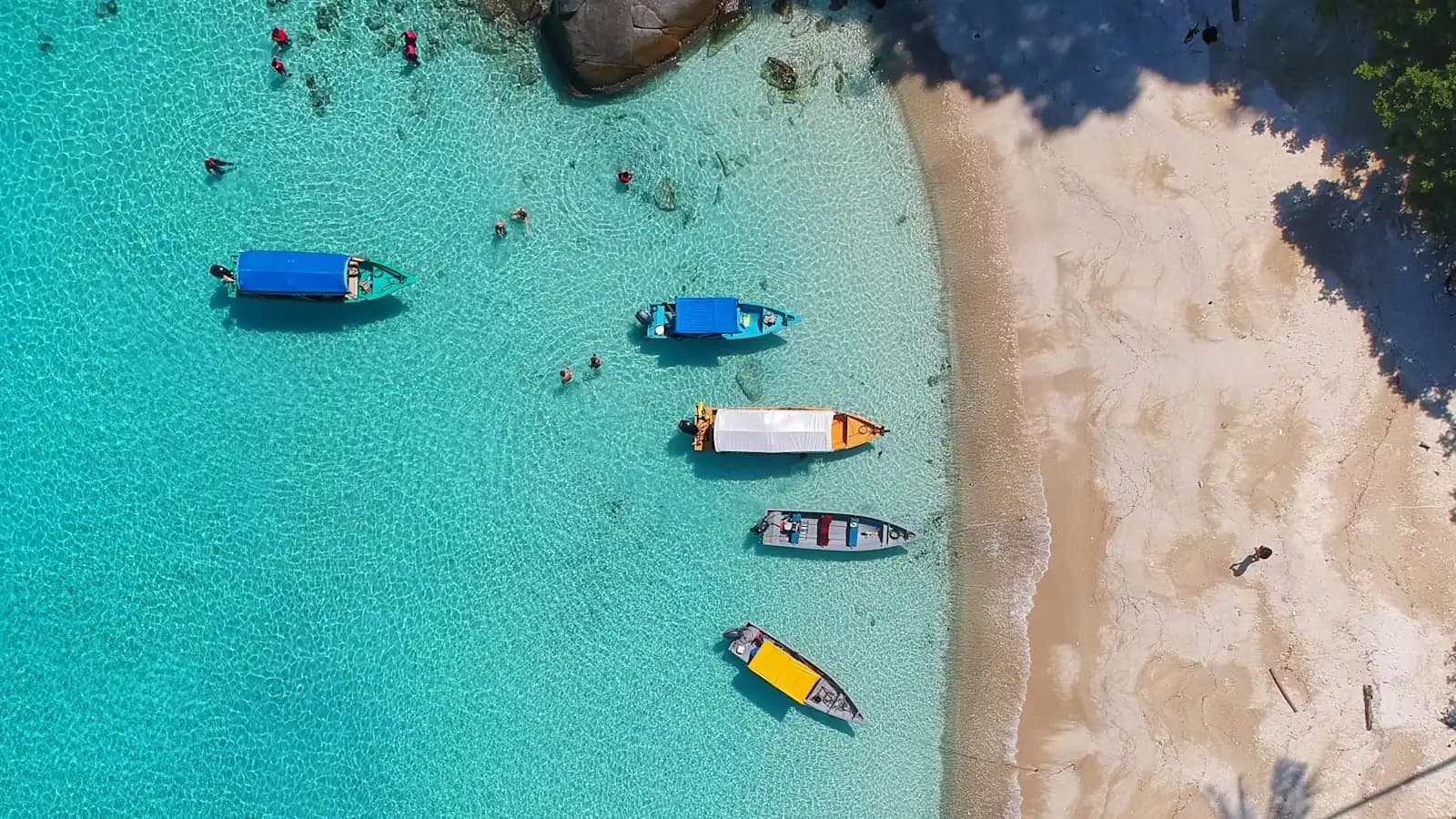
Small boats on shallow clear water beside a sandbar, seen from aboveUnsplash

This is the part of Marco's water that you drive yourself, and the island splits it neatly into two markets. On the Gulf side, concessions on the resort beach rent waverunners, paddleboards, kayaks, chairs and sailing dinghies by the hour, and run parasailing from the sand. On the river side, the marinas rent pontoons, deck boats and waverunners by the half or full day and put you straight into the Marco River with the Ten Thousand Islands in front of you. Which one you want comes down to a single question: do you plan to stay in sight of your towel?

Marco also has an unusually developed guided jet-ski market. Rather than an hour going in circles off the beach, several operators run led tours of two hours or more that push out through the passes and into the back bays, covering real distance. That is a genuinely better product than a rental lap, and it is the format most visitors here end up booking.

The rules are worth reading before the counter reads them to you, because on a personal watercraft you are the operator rather than a passenger and the responsibility is personal. Fourteen is the minimum age to operate a personal watercraft in Florida, no exceptions and no adult-supervision workaround. Most liveries will only rent to someone eighteen or over. If you were born from 1 January 1988 onward, running anything above ten horsepower requires Florida's Boating Safety Education Identification Card — or the temporary certificate a livery can issue once it has walked you through its safety briefing. Personal watercraft may not be operated between sunset and sunrise, which is why nobody sells a sunset jet-ski tour here. And every rider wears a flotation device and an engine cut-off lanyard.

The physical hazard on Marco is not the Gulf. It is the bottom. Behind the island and across much of the nearshore, water is two to four feet deep over hard sand, seagrass and oyster bar, and none of that is visible at speed on a bright day. Running out of the marked channels is how people break skegs, tear up seagrass beds and occasionally get hurt. Seagrass damage is a violation rather than an accident, and the back bays around Marco carry visible scarring from exactly this.

Then there are the slow zones. Manatee protection covers the Marco River, Collier Bay and Goodland Bay, and they are enforced. On a guided tour you spend the first fifteen or twenty minutes at idle before anybody opens the throttle, which surprises people who paid for an hour.
Our picks

The ones we would book

  • Editor's Pick

    Best guided jet-ski tour

    Why we chose it

    A two-hour led tour out of the river that clears the slow zones, runs a pass and covers real distance along the island and into the back bays. Priced per machine with two riders allowed, which makes it reasonable for a couple. Pick a guide who stops and shuts down around wildlife rather than steering toward it.

  • Best for Families

    Best watersports for families

    Why we chose it

    A beach concession session rather than an open-water tour: paddleboards, a tandem kayak and a couple of hours in shallow, sheltered water within sight of where you are sitting. Under-fourteens cannot operate a waverunner in Florida, so this is the format that includes everybody rather than sidelining the youngest.

Guided jet-ski tours, and whether they are worth it

A guided tour on Marco typically runs two hours and covers a serious loop — out of the river, through Capri or Big Marco Pass, along the island's Gulf front, past the sand flats and often south toward the shoals or east into the back bays. Guides lead in a line, stop periodically, and handle the navigation, which matters more here than it sounds because the channels are unmarked and the bottom is unforgiving.

Pricing is per machine rather than per rider, and two people are usually allowed on one, which changes the value calculation completely for a couple. Expect something in the region of $200 to $300 for a two-hour guided tour on a single ski, and roughly half to two-thirds that for a straightforward hourly rental.

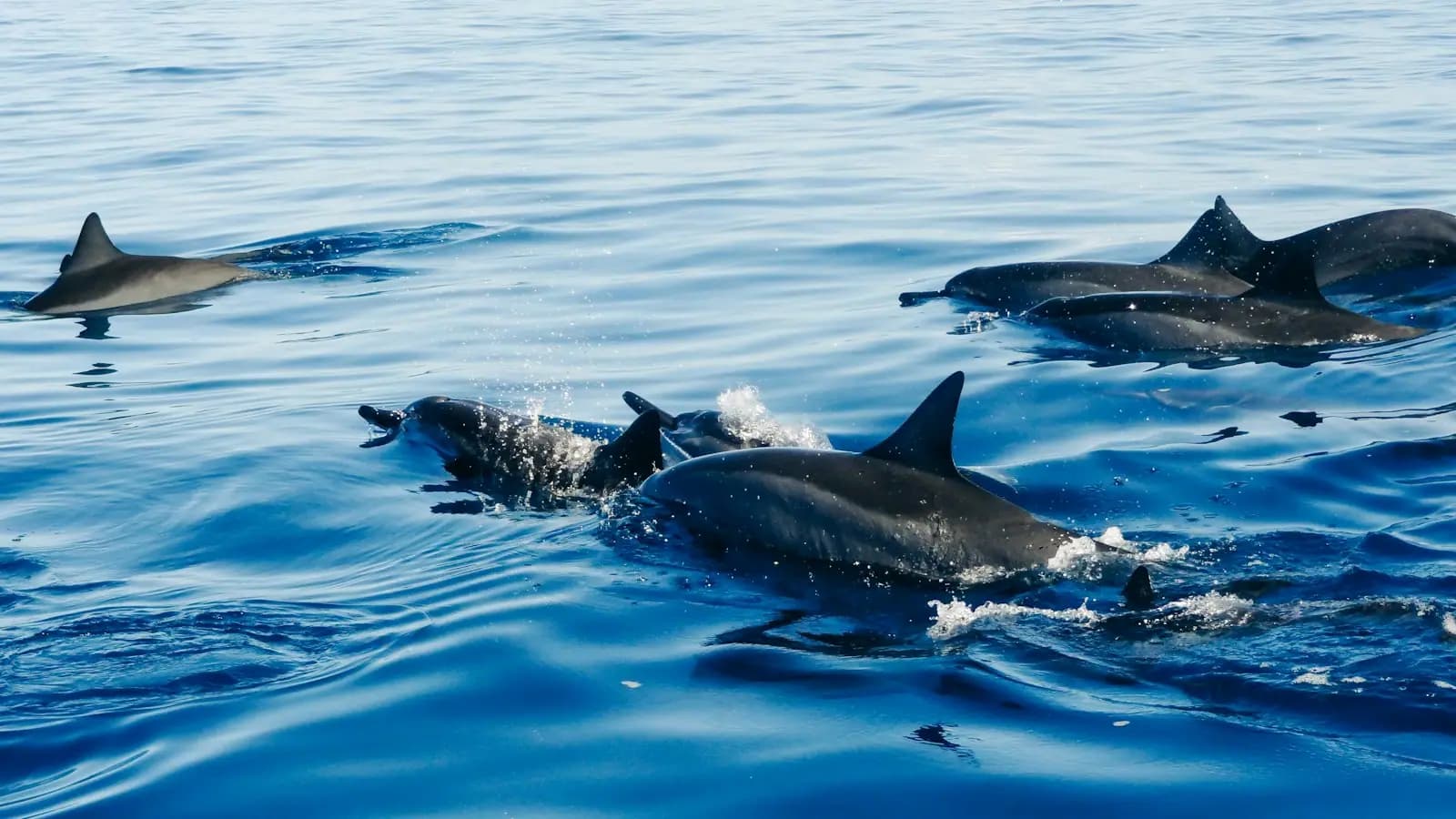
The honest framing on wildlife. These tours do encounter dolphins, because the routes cross the passes where dolphins feed, and most operators advertise that heavily. A machine at speed is not a wildlife-viewing platform, and the guides worth booking are the ones who cut engines and let animals approach rather than steering toward them. Read reviews for how the guide behaved around animals, not for whether fins were seen.

If both speed and watching matter to you, do them separately. A morning on a boat and an afternoon on a ski is a better day than a compromise between them.

Parasailing and the rest of the beach menu

Parasailing launches and lands from the boat deck rather than the beach, so you stay dry unless you ask not to. Flights typically run around eight to twelve minutes at line lengths that put you several hundred feet up, and the boat carries several people per trip with each flying in turn — which means the outing is closer to an hour than to ten minutes. Weight limits apply at both ends, single and tandem flights are priced differently, and wind cancels flights more often than rain does. Expect somewhere in the region of $90 to $150 per person.

Paddleboards work well here precisely because there is no surf. Flat morning water on the Gulf side or inside the Tigertail lagoon is close to ideal for learning, and a board is a good way to see rays and small sharks in the shallows.

Pontoon and deck boat rentals are the main event for groups. A full day gets you to Keewaydin comfortably. Fuel is extra, a boating safety card applies under the same rule as for waverunners, and you are responsible for the grounding.

What Marco does not have: reef snorkelling or diving of any consequence. Gulf water here is productive rather than clear, visibility is usually measured in feet rather than tens of feet, and there is no coral. Anyone arriving with a mask expecting Florida Keys water will be disappointed, and it is better to know that before you book.

Reading shallow water at speed

Local tips

Most incidents here are groundings rather than collisions, and they happen for the same handful of reasons every time.

  • Water colour is your depth gauge. Dark green is usually grass, pale brown is sand shoaling up, and a clean turquoise band in the middle of a bay is often the deep channel. Polarised sunglasses make this visible; without them it is guesswork.
  • Tide changes everything. A route that was fine at eleven in the morning can have two feet less water in it by three in the afternoon. Ask the livery what the tide is doing before you leave.
  • Stay in the marked channel until you know better. Markers exist because everywhere else is shallower.
  • Watch for crab-trap floats in the nearshore, particularly in the cooler months. They tangle intakes.
  • Come in ahead of the weather. Summer thunderstorms build inland after lunch and move west fast; lightning over open water is the real risk on this coast, not waves.
  • File your plan with the livery, and stay within the boundary you agreed. Search and rescue for an overdue rental takes hours in this geography.

None of this makes Marco a difficult place to ride. It makes it a place where the bottom rather than the sea decides how your day ends.

Who this suits, and who should skip it

Confident adults and teenagers over fourteen who want to cover distance will get a lot out of a guided tour, and the routes here — out through a pass, along a real Gulf beach, into an archipelago — are more interesting than a rental circuit at most Florida resorts.

Families with younger children are better served by the beach concessions: paddleboards, a kayak, a couple of hours in knee-deep water. Under-fourteens cannot operate a waverunner, and riding pillion at speed is not much fun for a small child.

Anybody who came here for the wildlife should book a boat instead and treat the ski as a separate activity. The two genuinely do not combine well, whatever the listing implies.

And if your budget is finite, be aware of the maths. An hour on a waverunner costs roughly what a two-hour boat cruise costs per head on this island, and the boat covers more ground and shows you more. Watersports on Marco are a good use of a second or third day. They are a strange choice for a first one.

Book it

Everything else we track

We could not find tours matching this right now

Nothing came back for jet ski. Operators add and retire experiences constantly, so this list changes week to week. Try a broader category, or come back in a day or two.

Beach concession or river marina?

How they compare

Beach concessionsRiver marinas
WhereThe resort stretch of the Gulf beachMarco River, near the Esplanade and the bridges
RentsWaverunners by the hour, paddleboards, kayaks, chairs, small sailboats, parasailingWaverunners, pontoons, deck boats, longer guided tours
Best forSpontaneous hours, families with a beach base, parasailingCovering distance, reaching the islands, a full day on the water
BookingOften walk-up, busy in seasonBook ahead, especially January to April
Watch forRental boundaries that keep you in a small areaFuel not included; you return it full

The beach concessions are convenient and the boundaries are restrictive by design — you are usually confined to a marked area within sight of the shore, which is sensible for a first-time rider and frustrating for anybody else. The river operators put you in open water immediately, which is more interesting and demands more of you.

If you are staying at a Gulf-front property, the concession on your own beach is the path of least resistance. If you want to see anything, book from the river.

The rules, in plain terms

Before you book

  • Age. Fourteen is the minimum to operate a personal watercraft in Florida. There is no supervised exception below that. Most liveries set their own rental floor at eighteen.
  • Education card. Born from 1 January 1988 onward? Then any engine above ten horsepower requires Florida's Boating Safety Education Identification Card, or a livery's temporary certificate issued after its own safety course.
  • Daylight only. Personal watercraft cannot be operated between sunset and sunrise.
  • Lanyard and lifejacket. The engine cut-off lanyard attaches to you, and a wearable flotation device is worn rather than stowed.
  • Slow-speed and idle zones. The Marco River, Collier Bay and Goodland Bay carry manatee protection restrictions. They are marked, they are enforced, and they apply to you.
  • Seagrass. Propeller scarring of seagrass beds is an offence in Florida waters. Stay in the channel; if you are unsure of depth, trim up and go slowly.
  • Wildlife distance. Pursuing, encircling or feeding dolphins and manatees is prohibited under federal law. Cut the engine and let animals come to you.
  • Nesting areas. The sand flats around Sand Dollar Island hold nesting shorebirds in season and are posted. Do not land on a marked area, and give roosting flocks a wide berth.

The consequences of the last four are not abstract. Collier County's back bays carry visible prop scars, and habituated dolphins around working docks are a local problem rather than a theoretical one.

On the ground

Where to go

Every place below has its own page — hours, parking, what it costs and what to expect when you get there.

  • Low sun across a thin sheet of water lying on an exposed sand flat at low tide

    Beach

    Tigertail Beach Park

    Free

    A county park where the Gulf beach sits on the far bank of a tidal lagoon, so the tide table decides what kind of day you get.

    2–6 hoursPark entry is free. Parking is paid at the county kiosk, around $10 per day.

  • Rows of small waves breaking over shallow offshore sandbars seen from above

    Beach

    Sand Dollar Island

    Free

    A sandbar that keeps rewriting itself off Marco's northwest shore, walkable at low water and gone from the map at high.

    1.5–5 hoursFree. The only cost is parking at Tigertail Beach Park.

  • Calm shallow water meeting fine pale sand on a wide Gulf beach

    Beach

    South Marco Beach Access

    Free

    Park on Swallow Avenue, cross Collier Boulevard, walk a short boardwalk and you are on open Gulf sand. No tides to solve.

    1.5–5 hoursBeach access is free. Parking is paid, around $10 per day for non-permit holders.

  • Docks and small boats along a narrow residential canal lined with mangroves

    Neighbourhood

    Isles of Capri

    Free

    Four dredged mangrove islands north of the Jolley Bridge, with working marinas, three waterfront restaurants and no beach at all.

    1.5–4 hoursFree to visit. You pay for food, boat hire or a charter, and nothing else.

  • Motor yachts moored in neat rows along floating docks in a sheltered basin

    Marina

    Marco Island Marina

    122 owner-held slips on the Big Marco River just inside the Jolley Bridge, and one of the few places a visiting boat can stay on Marco.

    0.5–2 hoursDockage is charged by the night or by the season. Not a public attraction — there is no visitor access to the docks.

Straight answers

Questions people actually ask

How old do you have to be to drive a jet ski on Marco Island?

Fourteen is Florida's minimum age to operate a personal watercraft, and there is no supervised exception below it. Separately, most liveries will only rent to somebody eighteen or over, so a fifteen-year-old can legally ride but usually cannot sign the contract. Riders born from 1 January 1988 onward also need Florida's boater education card, or the temporary certificate the livery issues.

How much do jet skis cost on Marco Island?

An hourly rental from a beach concession commonly runs in the region of $120 to $180 for the machine, with two riders usually allowed. A two-hour guided tour from a river operator is more often $200 to $300 per ski. Parasailing typically lands around $90 to $150 per person. Fuel is sometimes extra on longer rentals, and a security deposit is normal. Confirm current rates when booking.

Do you need a licence to rent a jet ski on Marco Island?

Not a driving licence, but boating safety education is required of anyone born from 1 January 1988 onward who is operating something above ten horsepower. That means either a Florida Boating Safety Education Identification Card, an equivalent card from another state, or the temporary certificate a livery can issue after running you through its safety course. Bring photo identification either way.

Can you jet ski at sunset on Marco Island?

No. Florida prohibits operating a personal watercraft between sunset and sunrise, which is why nobody on the island sells a sunset jet-ski trip. Tours are scheduled to be back on the dock before the sun goes down, and liveries take that deadline seriously because the fines fall on them as well as on you. If you want the sunset on the water, book a boat.

Is there good snorkelling on Marco Island?

Not really, and it is better to say so. There is no coral reef on this stretch of coast and Gulf water here is productive rather than clear — visibility is usually a few feet rather than tens of feet, because the estuary is full of the suspended material that feeds the fishery. Snorkelling trips sold locally generally run well offshore. Come for the boating and fishing instead.

Where can you rent a boat on Marco Island?

The Marco River marinas are the main source, renting pontoons, deck boats and waverunners by the half or full day, with fuel extra and a deposit required. The same boating safety education rule applies as for personal watercraft. Take a guided trip first if you have not run these waters before: the bays are two to four feet deep over hard sand and oyster bar, and a grounding at speed is expensive.

Will I see dolphins on a jet-ski tour from Marco Island?

Frequently, because the routes cross the passes where dolphins feed on moving tide. Set your expectations honestly though: a machine at speed is not a viewing platform, and what you get is usually a glimpse rather than time spent watching. Good guides cut engines and let animals approach on their own. If watching dolphins is the actual goal, a boat trip will serve you far better.

Are there rules about where you can ride on Marco Island?

Yes, several. Manatee protection zones on the Marco River, Collier Bay and Goodland Bay restrict speed and are enforced. Propeller scarring of seagrass beds is an offence in Florida waters, so stay in marked channels where you are unsure of depth. Nesting shorebird areas around the sand flats are posted and closed in season. Beach concession rentals also confine you to a marked area near shore.