Skip to content
Menu

We earn a commission if you book through this link. You pay the same price.

Search

Tours

Marco Island Fishing Charters

Last updated

Three fisheries start within twenty minutes of Marco Island. Which boat to book for snook, tarpon or grouper, what a charter costs, and the current rules.

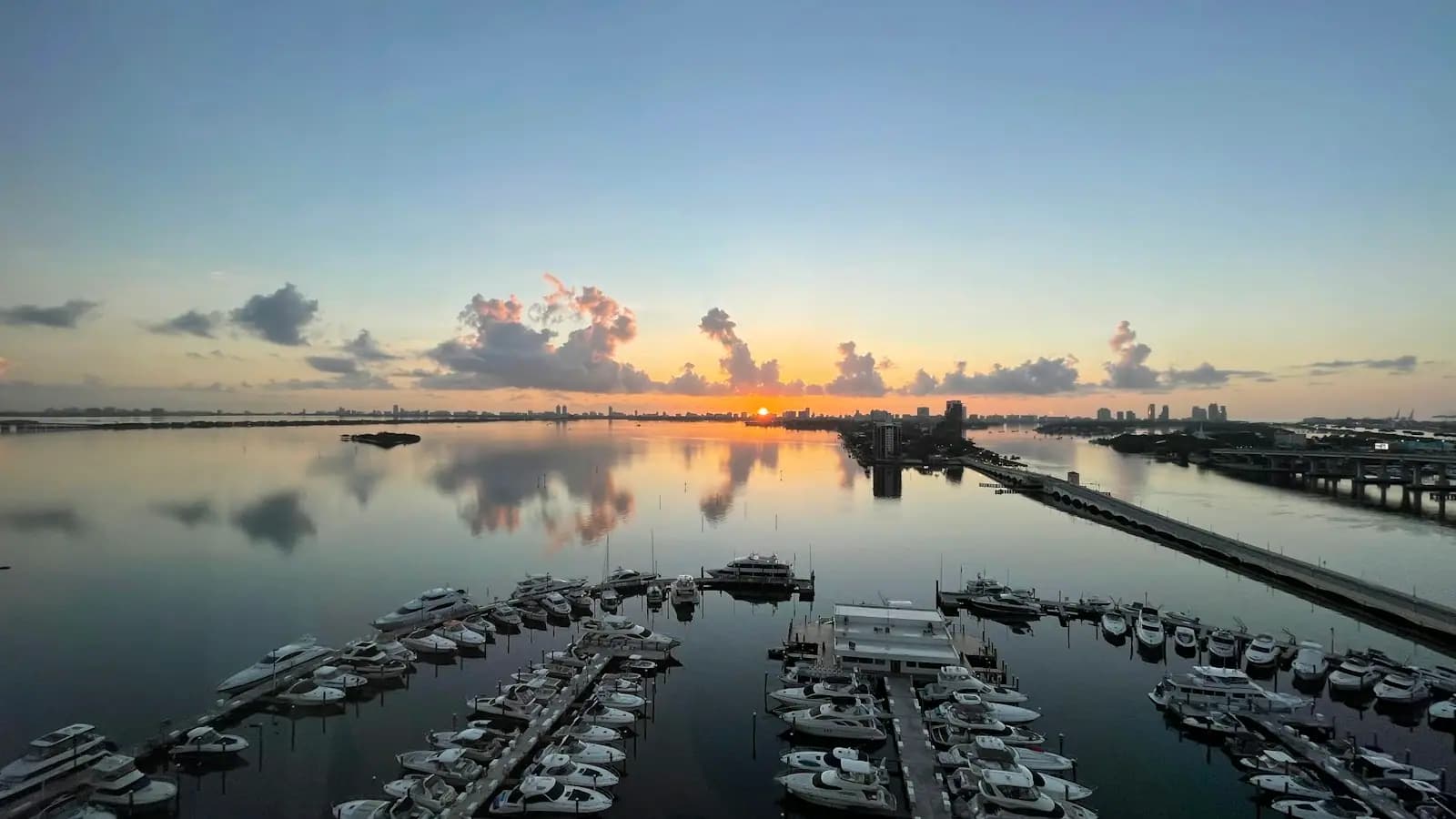
Sportfishing boats moored along a marina dock on a sheltered waterwayUnsplash

Most fishing destinations sell you one fishery and dress it up three ways. Marco genuinely has three, and they begin within twenty minutes of the same dock, which is unusual enough to be the reason serious anglers keep coming back to an island better known for its condominiums.

The backcountry starts the moment you leave the Marco River. Behind and south of the island, the Ten Thousand Islands are a maze of oyster bars, creek mouths, potholes and mangrove shoreline in water that is often two to four feet deep and sometimes less. This is snook, redfish, juvenile tarpon, sea trout, snapper and sheepshead water, fished by casting at structure rather than by trolling, and it is the fishery that makes Marco different from the rest of the Gulf coast.

Nearshore is everything from the pass mouths out to roughly ten miles. Sand bottom, scattered hard patches, channel markers, crab-trap floats and the beach itself. Spanish mackerel, pompano, tripletail, cobia, sharks, and in spring and early summer, the migrating tarpon that roll along the Gulf beaches in numbers that draw anglers from a long way away.

Offshore means hard bottom, artificial reefs and wrecks, a run of anywhere from fifteen to forty-plus miles depending on what the captain is after. Grouper, snapper, permit, amberjack, kingfish. It is the most expensive day, the roughest, and the one with the most rules attached.

The single decision that shapes everything is the hull. A flats skiff will pole you silently onto a school of redfish in a foot of water and will make you miserable in a Gulf chop. A bay boat crosses open water at speed and still gets into three feet. An offshore centre console handles the twenty-mile run and cannot enter the places the skiff was built for. No boat does all three, and any captain who says otherwise is selling a compromise.

The second decision is the tide, and here it is not a detail. In water this shallow, moving water is what turns fish on: it drains bait off the flats, stacks it against the oyster bars, and gives a fish a reason to sit somewhere predictable. Guides on this coast book around tide, not around breakfast, which is why a good charter may want you on the dock at six or at ten rather than at whatever time suits your hotel.
Our picks

The ones we would book

  • Editor's Pick

    Best all-round charter from Marco

    Why we chose it

    A six-hour backcountry and nearshore trip on a bay boat, planned around the day's tide rather than a fixed departure. It covers the mangrove edges and the pass structure in one trip, suits anglers of mixed experience, and puts you in the Ten Thousand Islands rather than just outside them.

  • Best for Families

    Best trip with children aboard

    Why we chose it

    A four-hour nearshore charter built for bent rods rather than trophies: short runs, sheltered water, and species that bite steadily. Ask the captain to plan for action over size. Half a day is the right length before heat and attention run out, and the boat stays close enough to come back early.

  • Best Private Tour

    Best private backcountry skiff

    Why we chose it

    Two anglers, a shallow-draft skiff and a guide poling rather than running the engine. This is the trip that justifies the phrase sight-fishing: casting at redfish you can see in a foot of water. It is the most technical day on this page and the least suitable for anyone who wants to sit down.

  • Best Value

    Best value per angler

    Why we chose it

    A shared or split half-day charter at the bottom of the local band. Divided across four people, a boat-priced trip often works out cheaper per head than a sightseeing seat on the same island, and includes rods, bait, tackle and the captain's licence. The compromise is the departure time, which will not be yours to choose.

    Naples Backwater/Calm Bay Fishing

    Involves Animals

    Naples Backwater/Calm Bay Fishing (opens in a new tab)

    Best ValueLikely to sell out
    84 reviews

    Coastal Calm Bay Fishing is the perfect experience for leisure fishing enthusiasts and families who want to capture the excitement of…

    3–4 hours

    Prices checked

    from $148.77

What swims when

When to go

Winter, December to February. Cooler water pushes fish into the deeper holes and the canals. Sheepshead stack around bridge pilings, dock structure and the Jolley Bridge foundations and are outstanding eating. Sea trout hold over grass on warmer afternoons, and pompano work the beaches. Cold fronts are the limiting factor: a hard northerly can flatten fishing for a day or two afterwards.

Spring, March to May. The best all-round stretch. Snook move out of the backcountry toward the passes, redfish school on the flats, tripletail appear on channel markers and crab-trap floats, and by late April the first migratory tarpon are on the beaches.

May and June. Tarpon season proper. Fish over a hundred pounds move through the passes and along the Gulf front and into the Ten Thousand Islands, and this is the fishery people book a year ahead for. It is also hot, and the good bite is early.

Summer into early autumn. Hot, humid, thunderstorm-prone. Early mornings are excellent for snook along the mangrove edges and around the pass structure; mid-afternoons are usually a write-off. Hurricane season runs to the end of November.

October and November. Quietly one of the best stretches of the year — settled weather, thinner crowds, redfish and snook both active, and the snook harvest window reopening in October.

What a Marco charter costs

What it costs

Charters are priced by the boat, not the seat, and that is the single most useful thing to understand when comparing quotes. Bands below; confirm current rates when you book.

  • Half day, four hours, backcountry or nearshore: commonly $500 to $750 for the boat, typically up to four anglers, sometimes only two on a skiff.
  • Three-quarter day, six hours: often $700 to $1,000, which is the sweet spot for getting properly into the islands.
  • Full day, eight hours, offshore: frequently $1,200 and up, and rising sharply with distance because fuel is the dominant cost.
  • Tarpon trips in peak season: priced above the equivalent half day, and the good guides are booked months out for May and June.

Nearly always included: rods, reels, terminal tackle, ice, bait and the captain's licence. Nearly always not included: food, drinks, a cooler for your fish, fish cleaning at some marinas, and the crew tip. Fifteen to twenty percent is the local expectation for a mate who has worked all day.

Split across four people, a $600 half day is $150 a head, which is less than a lot of the sightseeing seats on this island. Fishing looks expensive as a headline and often is not per person.

If you want your catch cleaned, ask before you leave the dock. Not every marina has a table and not every captain fillets.

Why a guide matters more here than most places

Anyone can catch a fish in twenty feet of water over a reef. Catching fish in two feet of water among identical mangrove islands is a different skill, and it is essentially local.

Three reasons. First, the fish are structure-oriented and the structure is invisible — oyster bars, potholes, creek mouths and drop-offs of eighteen inches that do not show on a chart and change after every storm season. A guide is carrying a mental map built over years.

Second, the tide gates access. A flat that fishes beautifully two hours into a falling tide is dry mud an hour later, and a creek that holds snook on the incoming is unreachable on the outgoing. Getting the sequence right across a six-hour trip is the actual craft.

Third, navigation. Outside the marked channels this water is unmarked, shoals shift, and mobile coverage thins south of Goodland. Running aground on oyster at speed is expensive and occasionally injurious.

The rental-boat alternative is legitimate and popular — Marco's marinas rent good bay boats — but understand what you are buying. You are renting the hull. You are not renting the twenty years of knowing where the fish sit at half tide on a northwest wind in March.

Book it

Everything else we track

We could not find tours matching this right now

Nothing came back for fishing charter. Operators add and retire experiences constantly, so this list changes week to week. Try a broader category, or come back in a day or two.

Three fisheries, three boats

How they compare

FisheryTypical runThe boatMain targetsTrade-off
Backcountry10–40 minutes into the Ten Thousand IslandsFlats skiff or bay boatSnook, redfish, trout, juvenile tarpon, snapper, sheepsheadTide-dependent; a wrong tide can shut a spot completely
NearshorePass mouths to about 10 milesBay boat or small centre consoleSpanish mackerel, pompano, tripletail, cobia, sharks, beach tarponWeather-exposed; a 15-knot sea breeze ends it
Offshore15 to 40-plus miles of hard bottom and wrecksOffshore centre console or sportfisherGrouper, snapper, permit, amberjack, kingfishLongest day, highest price, most seasonal closures

The right question at the booking stage is not "what is biting" but "what kind of day do I want". Backcountry is casting, poling and sight-fishing — active, technical and often the most fun with a competent angler aboard. Nearshore is the family compromise: short runs, steady action, fish that everyone catches. Offshore is a commitment of eight hours or more, with a long ride at each end and the most likely to be cancelled by wind.

If there are children aboard, say so when you book. A good captain will build a nearshore day around bent rods rather than around trophy fish, and that is the correct call.

The rules that actually apply here

Before you book

Marco sits inside Florida's Southwest snook management region, and the regulations here are not the same as the ones an angler from Tampa or the Atlantic coast will quote at you. Check the current rule before you keep anything — these change, and the penalties are real.

  • Snook. Harvest in the Southwest region is open in two windows: 1 March to 30 April, and 1 October to 30 November. Outside those it is catch and release. The slot is 28 to 33 inches total length, one fish per angler per day, and a snook permit is required in addition to a saltwater licence.
  • Redfish. An 18 to 27 inch slot applies on this coast. Bag limits were reset under a regional management framework that took effect in 2026, so confirm the current Southwest region limit rather than relying on an older figure.
  • Tarpon. Effectively catch and release. Harvest requires a specific tag, sold for the narrow purpose of a potential record fish, and any tarpon over 40 inches must stay in the water during release — it cannot be lifted into the boat for a photograph.
  • Licences. If you fish from a licensed charter vessel, the captain's licence normally covers you. If you fish from a rental boat, a dock or the shore, you need your own Florida saltwater licence.
  • Offshore species. Gag grouper, red grouper and several snapper species carry their own seasons and size limits in Gulf waters. A charter captain will know the current position; an angler working from memory usually does not.

Handling matters as much as paperwork. In summer water temperatures here, a fish played to exhaustion and held out of the water for photographs frequently does not survive release.

Booking and what to bring

What to bring

Book early for the high season and very early for tarpon. January through April fills weeks ahead, and the May–June tarpon guides take reservations the previous year.

What to bring:

  • Polarised sunglasses. Not optional in sight-fishing water; you cannot see fish or bottom without them.
  • A long-sleeved sun shirt and a buff. Better than reapplying sunscreen in thirty knots of apparent wind.
  • Soft-soled shoes or bare feet. Black-soled trainers mark a deck and some captains will ask you to leave them at the dock.
  • A soft cooler with your own food and drink. Very few charters feed you.
  • Motion-sickness tablets taken the night before if you are prone and heading offshore. Taken at the dock, they are too late.
  • Cash for the mate.

Two questions to ask before you pay a deposit. What happens if the weather cancels — most captains reschedule or refund, but confirm it. And what is the maximum number of anglers on that boat, because a skiff that takes two is not a boat for a family of five.

On the ground

Where to go

Every place below has its own page — hours, parking, what it costs and what to expect when you get there.

  • Low evening sun across a wide expanse of tall golden marsh grass

    Wildlife

    Ten Thousand Islands National Wildlife Refuge

    Free

    Thirty-five thousand acres of mangrove wilderness with one land trail, one observation tower and eighteen parking spaces.

    1–4 hoursFree. No entry fee and no parking charge at the Marsh Trail.

  • Low wooden storefronts with corrugated roofs along a quiet two-lane road in a small coastal settlement

    Neighbourhood

    Goodland

    Free

    A few hundred people, one road in, stone crab traps stacked in the yards. The opposite of the resort side of the same island.

    1.5–5 hoursFree to visit. Boat launch fees apply at the county ramp.

  • A quiet road running through a low coastal settlement towards open water

    Neighbourhood

    Chokoloskee

    Free

    A 150-acre Calusa shell mound at the end of the road, twenty feet above an Everglades that is otherwise at sea level.

    1.5–8 hoursFree to visit the island. The Smallwood Store charges a small admission, and boat ramps charge to launch.

  • Small charter and fishing boats tied up in a compact working harbour basin

    Marina

    Caxambas Park

    Free

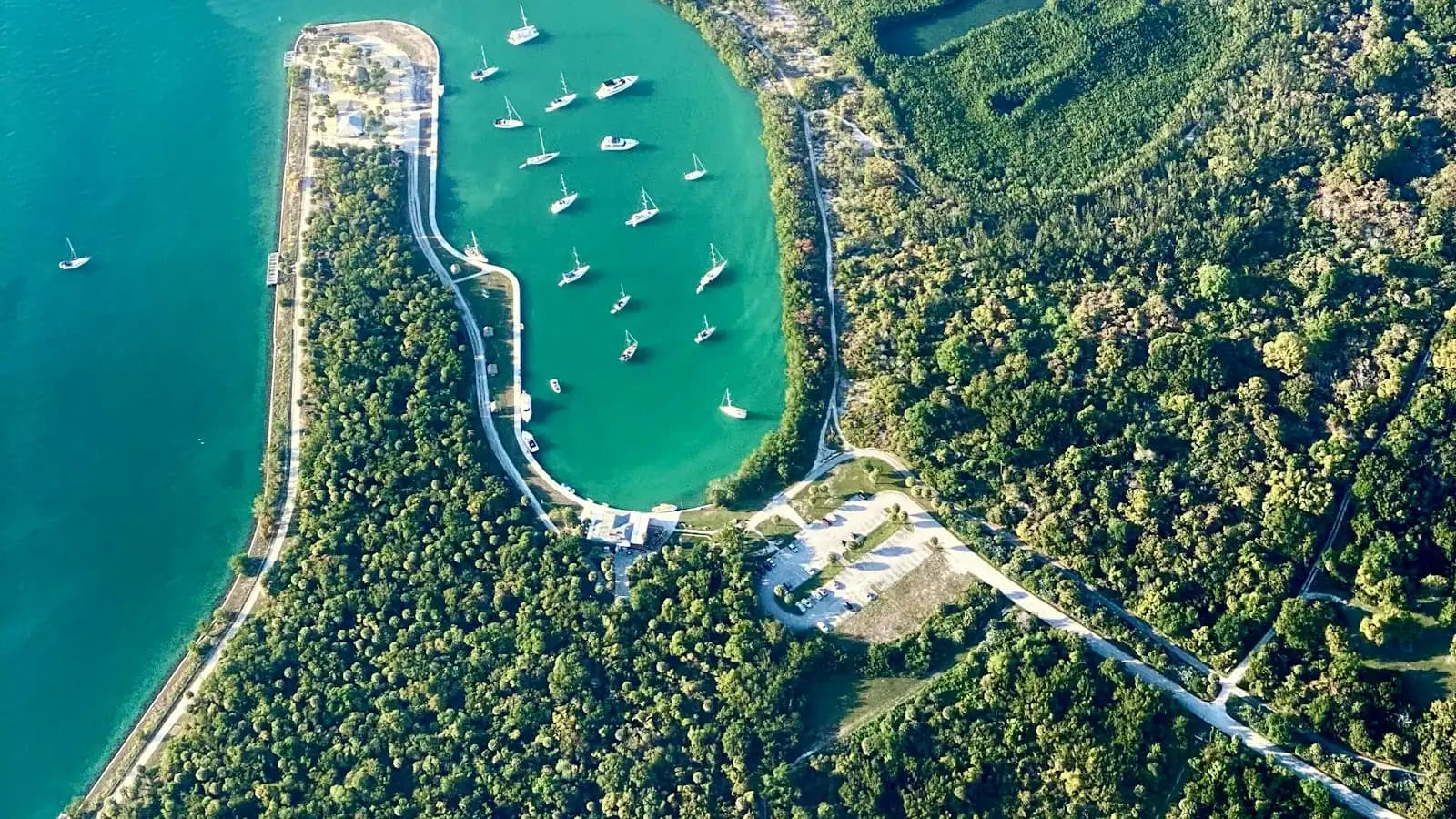
    The county ramp at Marco's southern tip, rebuilt after Ian, and the shortest launch to Kice Island and Cape Romano.

    0.5–4 hoursPark entry is free. Boat launching is charged per launch, with an annual county pass available.

  • Docks and small boats along a narrow residential canal lined with mangroves

    Neighbourhood

    Isles of Capri

    Free

    Four dredged mangrove islands north of the Jolley Bridge, with working marinas, three waterfront restaurants and no beach at all.

    1.5–4 hoursFree to visit. You pay for food, boat hire or a charter, and nothing else.

  • Shallow estuary water running between low mangrove islands at low tide

    Water feature

    Barfield Bay

    Free

    Marco Island's quiet back-side estuary, a foot deep over grass and oyster bar, best seen from a kayak and barely seen from land.

    2–5 hoursFree. Launch and parking fees apply at Caxambas Park, and hire or a guide is charged separately.

  • Heavy cloud building over open water in the late afternoon

    Landmark

    Cape Romano Dome House

    Free

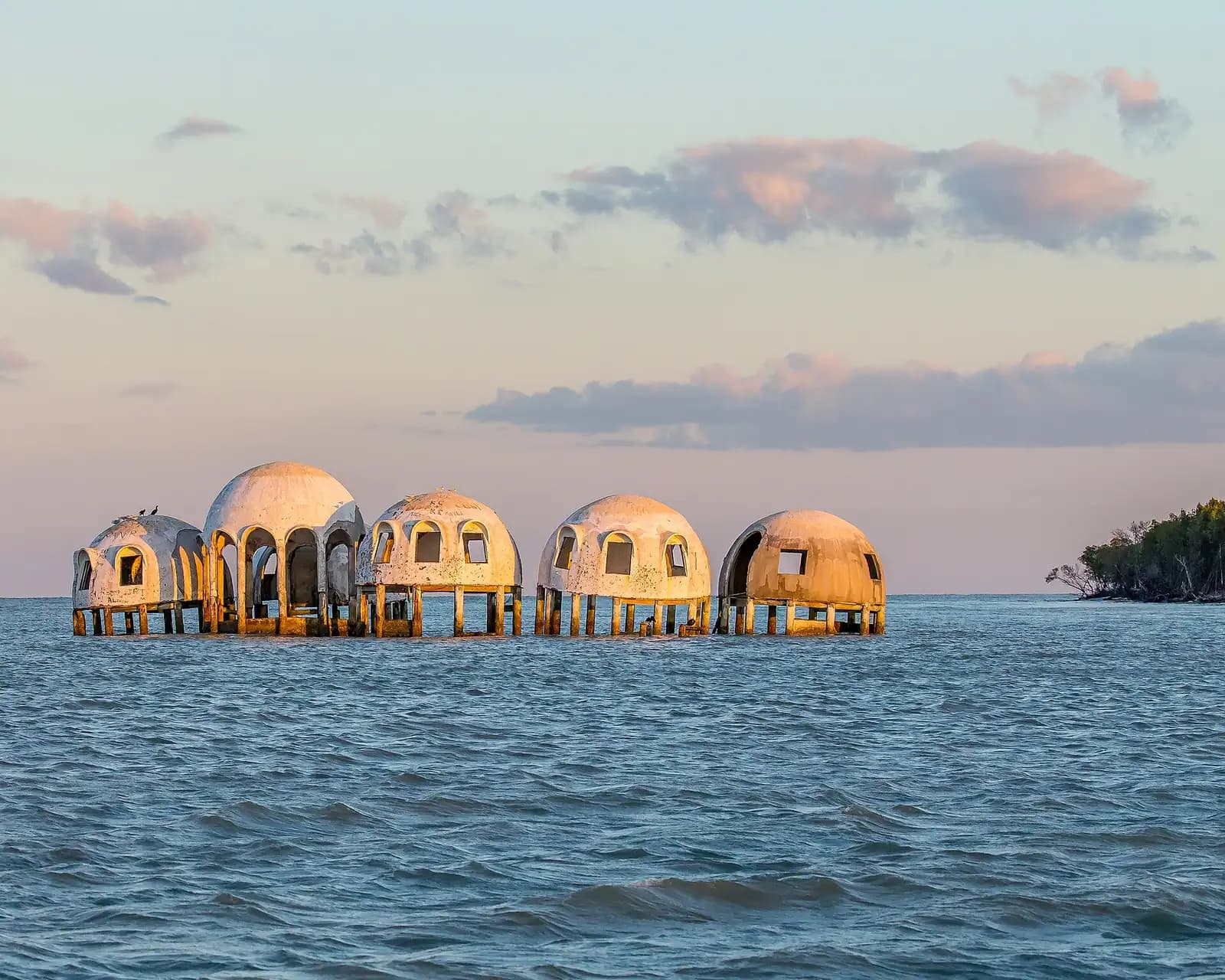
    The domes off Cape Romano fell in Hurricane Ian. What is left is pilings and rubble in open water, and still worth the run south.

    0.5–1 hoursFree to look at from the water. The cost is the boat or the charter seat.

  • Small boats moored along a sheltered river channel with a low mangrove shoreline beyond

    Landmark

    Judge S.S. Jolley Bridge

    Free

    Marco Island's front door: a fixed 55-foot span over the Marco River, with shore fishing at its foot and the busy 951 ramp alongside.

    0.5–3 hoursFree to cross and free to fish from the shoreline. Launching and parking at the boating park are charged.

  • Motor yachts moored in neat rows along floating docks in a sheltered basin

    Marina

    Marco Island Marina

    122 owner-held slips on the Big Marco River just inside the Jolley Bridge, and one of the few places a visiting boat can stay on Marco.

    0.5–2 hoursDockage is charged by the night or by the season. Not a public attraction — there is no visitor access to the docks.

Straight answers

Questions people actually ask

How much is a fishing charter on Marco Island?

Charters are priced by the boat rather than per person. A four-hour backcountry or nearshore trip commonly runs $500 to $750, six hours often $700 to $1,000, and a full offshore day usually starts around $1,200 and climbs with distance. Rods, bait, tackle and the captain's licence are normally included; food, drinks and the mate's tip are not. Split four ways, a half day is often cheaper per head than a sightseeing cruise.

Do I need a fishing licence on a Marco Island charter?

Not if you are fishing from a properly licensed charter vessel — the captain's licence covers paying passengers, which is one of the quiet advantages of booking a guide. You do need your own Florida saltwater licence if you fish from a rental boat, from a dock, from a bridge or from the shore. Licences are available online and from tackle shops, and a short-term non-resident option exists.

When can you keep snook on Marco Island?

Marco sits in Florida's Southwest snook region, where harvest is open from 1 March to 30 April and from 1 October to 30 November. Outside those windows snook are catch and release. When open, the limit is one fish per angler per day within a 28 to 33 inch slot, and you need a snook permit on top of a saltwater licence. Rules change, so confirm the current season before keeping a fish.

When is tarpon season on Marco Island?

The migration builds from March, peaks through May and June, and tapers off in July. Fish move along the Gulf beaches, through Capri and Caxambas passes and into the Ten Thousand Islands, and juveniles are in the backcountry creeks earlier in spring. Tarpon are effectively catch and release in Florida, and anything over 40 inches has to stay in the water while it is unhooked and revived.

What kind of fishing is best for beginners on Marco Island?

A four-hour nearshore trip on a bay boat. The runs are short, the water is sheltered enough to be comfortable, and species like Spanish mackerel, trout and snapper bite steadily, which matters far more than size when somebody is learning. Backcountry sight-fishing looks glamorous and demands accurate casting; it is a frustrating first day for anyone who has not cast much.

Can you fish from shore on Marco Island?

Yes, with a licence, though the island is not a shore-fishing destination in the way a pier town is. Bridge and causeway structure, the residential canals where permitted, and the Gulf beaches at first light all produce fish. Snook hold around dock lights and bridge pilings after dark, and sheepshead cluster on structure through winter. A charter reaches water that shore access simply cannot.

What is the best month to fish Marco Island?

April and May, if you want one answer. Water has warmed, snook have moved toward the passes, redfish are schooling, tripletail are on the markers and the tarpon migration is arriving. October and November are the quieter alternative with settled weather, thinner crowds and the snook harvest window open. Deep summer fishes well before nine in the morning and poorly after lunch.

Should I book a guide or rent a boat to fish Marco Island?

Book a guide first. The backcountry here is two to four feet deep, unmarked, floored with oyster bar and rearranged by every storm season, and the fish sit on structure that does not appear on a chart. A rental gets you a hull; it does not get you the knowledge of which flat fishes on which half of the tide. Rent on day three if you still want to, not on day one.