Skip to content
Menu

We earn a commission if you book through this link. You pay the same price.

Search

Landmark

Cape Romano Dome House

Last updated

The domes off Cape Romano fell in Hurricane Ian. What is left is pilings and rubble in open water, and still worth the run south.

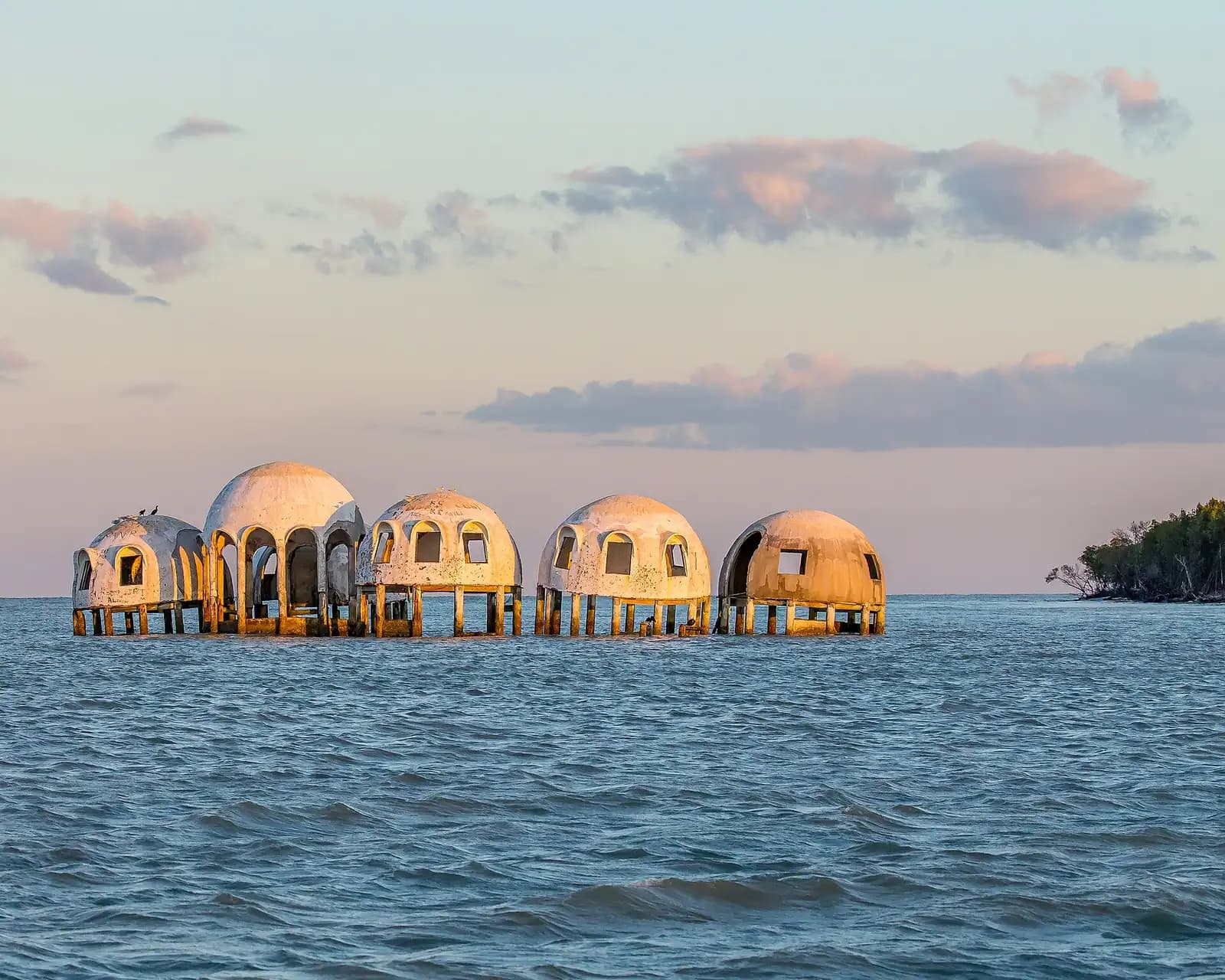
Photo: Andy Morffew from Itchen Abbas, Hampshire, UKCC BY 2.0

Closed at the moment

The last structures standing above water collapsed during Hurricane Ian on 28 September 2022. What remains is submerged and partly submerged rubble and pilings, not the domes shown in most photographs.

For thirty years the domes off Cape Romano were the strangest thing on this coast: six interconnected concrete pods on stilts standing in open Gulf water, three miles south of Marco Island, with no land underneath them and no road within reach.

There was land once. Bob Lee, a retired oil producer, began building in 1980 and finished in 1982, putting a 2,400 square foot, three-bedroom, self-sufficient holiday house on what was then a beach. The Gulf took the beach. Hurricane Andrew gutted the interior in 1992 and it was abandoned. By 2004 water was up against the concrete pillars, and Hurricane Wilma the following year accelerated everything. A later owner bought it in 2005 for around three hundred thousand dollars; the state of Florida's Department of Environmental Protection has held the site since 2018.

Then the storms finished it. Hurricane Irma dropped the two westernmost domes in 2017. Hurricane Ian, on 28 September 2022, took everything that was still standing above water.

What is there now is pilings, broken concrete and rubble in shallow open water, with only some of the supports breaking the surface, and how much you see depends on the state of the tide and on whatever the last storm season did. It is no longer a silhouette on the horizon; it is a wreck site you have to be taken to.

That is not a reason to skip it. The run south from Caxambas Pass past Kice Island, along the Cape Romano shoals with their charted danger areas and constantly moving sandbars, is one of the best boat trips on this coast, and the structure has become an accidental reef holding snapper, sheepshead and baitfish. Just go for the trip and the shoals, not for the photograph you have seen.
Getting there and parking

By boat only. The site lies in shallow open water off Cape Romano, a few miles south-east of Marco Island's southern tip, and there is no land access of any kind.

The shortest runs are from Caxambas Park at the south end of Marco Island and from Goodland Boating Park, both of which put you in the right water quickly. From the Marco River marinas at the north end you are adding a long outside leg or a slow inside route.

Charter captains and tour operators sell the trip from all three, usually combined with a shelling stop on Kice Island or one of the outer Ten Thousand Islands beaches.

In a private boat, treat the Cape Romano shoals seriously. They are extensive, shallow, mobile and charted as a danger area, and electronic charts lag reality here by years.

What you will actually see in 2026

Expect pilings, not domes. The last above-water structures came down in Hurricane Ian on 28 September 2022, and what survives is a scatter of concrete supports and broken shell in shallow water off the cape.

How much shows depends on the tide. At a low spring tide more of the structure breaks the surface; at a high tide there can be very little to look at. The site also keeps degrading, so the picture changes year to year.

This matters commercially. Boat tours are still sold on the strength of the dome house, and many listings and thumbnails use photographs taken years before the collapse. That is not always dishonest, but it is misleading if you arrive expecting the postcard. Ask the captain directly what is currently visible and whether the run is worth it on the day's tide.

Treat the ruins as a hazard rather than a playground. Submerged concrete and exposed reinforcing bar sit at unpredictable depths, the water moves over the shoals, and there is no cell coverage worth relying on and no help nearby. Swimming among the pilings is a genuinely poor idea, whatever anybody's video shows.

The site belongs to the state. Do not take material from it.

Getting out there

Cape Romano lies a few miles south-east of Marco Island's southern tip, and every practical route is by water.

Charter and tour operators run it from Caxambas Park at the south end of Marco and from Goodland, both of which are closer to the site than the marinas at the north end. A half-day trip usually pairs the domes with a shelling stop on Kice Island or one of the Ten Thousand Islands beaches, which is the right way to structure the day: the ruins are ten minutes of looking, and the islands are the substance.

In your own boat, this is water that demands respect. The shoals off Cape Romano are extensive, shallow and mobile, charted with danger areas, and they do not match what a plotter's base map shows. Go on a rising tide, keep speed down, watch the water colour rather than the screen, and consider running it the first time with someone who knows it.

Kayaking to the site from Marco is not a sensible day trip. It is open Gulf water with tidal currents through Caxambas Pass, and the distance is misleading on a map.

Aim for morning if you want flat water. The sea breeze builds most afternoons and the shoals get lumpy.

What else is down there

  • Kice Island sits between Caxambas Pass and the cape: boat-access only, a couple of miles of empty Gulf beach and the heaviest shelling within easy reach of Marco. Whelks, conchs, olives and pen shells.
  • The Cape Romano shoals are a wildlife show in their own right. Shorebird flocks work the exposed bars at low water, and the sandbars themselves shift enough that regulars can tell you which ones were not there last year.
  • Fishing around the ruins and the surrounding structure is productive for snapper, sheepshead and snook, with tarpon in the passes in late spring and early summer.
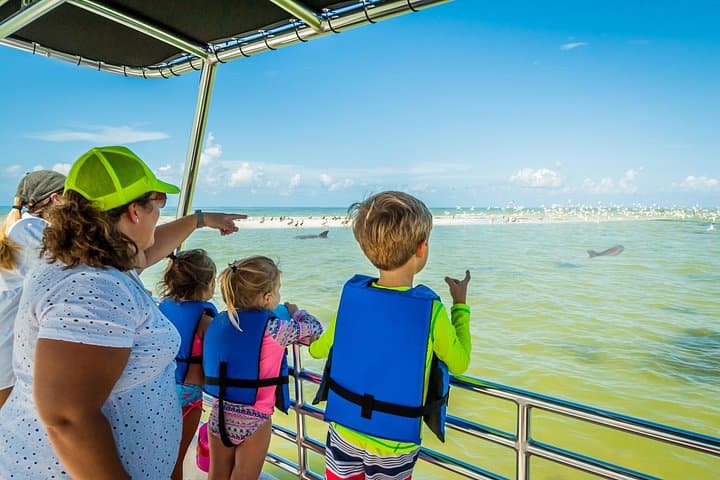
  • Dolphins are near-certain on the run south, and they will work a boat wake in the passes.
  • Nesting closures apply to posted beaches and shoals in this area through spring and summer. Look for the signs and stay off.
  • Nothing is sold anywhere out here. Water, food, sun cover and fuel are all your problem before you leave the dock.
  • Stone crab boats work this water from 15 October, and the trap lines are a real hazard to a propeller. Watch for floats.

Tours that visit Cape Romano Domes

Operators run these trips past Cape Romano Domes, or stop there as part of a longer route. We list what the booking data supports — not everything that mentions the name.

Some links below go to Viator, our booking partner. We earn a commission on bookings made through them — at no extra cost to you, and with no influence on what we recommend.

Shared departurespriced per seat, best value for one or two

Private and small-group optionsoften cheaper per head for a family or a group of six

Near Cape Romano Domes

Straight-line distances, so allow more on the road — the island is long and has one main parkway.

  • An empty stretch of Gulf beach with a low dune line and no buildings in sight

    Beach

    Kice Island

    Free

    Two miles of empty Gulf beach across Caxambas Pass, boat access only, with no shade, no water and the best shelling near Marco.

    2–5 hoursFree. You pay only to launch or to book a charter.3.7 mi away

  • Small charter and fishing boats tied up in a compact working harbour basin

    Marina

    Caxambas Park

    Free

    The county ramp at Marco's southern tip, rebuilt after Ian, and the shortest launch to Kice Island and Cape Romano.

    0.5–4 hoursPark entry is free. Boat launching is charged per launch, with an annual county pass available.4.7 mi away

  • Low wooden storefronts with corrugated roofs along a quiet two-lane road in a small coastal settlement

    Neighbourhood

    Goodland

    Free

    A few hundred people, one road in, stone crab traps stacked in the yards. The opposite of the resort side of the same island.

    1.5–5 hoursFree to visit. Boat launch fees apply at the county ramp.5.8 mi away

  • Low evening sun across a wide expanse of tall golden marsh grass

    Wildlife

    Ten Thousand Islands National Wildlife Refuge

    Free

    Thirty-five thousand acres of mangrove wilderness with one land trail, one observation tower and eighteen parking spaces.

    1–4 hoursFree. No entry fee and no parking charge at the Marsh Trail.10.7 mi away

Cape Romano Domes: common questions

Are the Cape Romano domes still standing?

No. Hurricane Irma toppled the two westernmost domes in 2017, and Hurricane Ian destroyed everything still standing above water on 28 September 2022. What remains is pilings, concrete and rubble in shallow water, with only some supports breaking the surface and the amount visible depending on the tide. Photographs showing intact domes on stilts were all taken before that date, and many tour listings still use them.

Who built the Cape Romano dome house and why?

Bob Lee, a retired oil producer, built it between 1980 and 1982 as a self-sufficient holiday home: six interconnected concrete domes on stilts, around 2,400 square feet, with three bedrooms. It stood on a beach at the time. Erosion removed the land beneath it over the following decades, Hurricane Andrew gutted the interior in 1992, and the house was abandoned. The State of Florida has held the site since 2018.

Can you swim at the Cape Romano domes?

It is a bad idea. The collapsed structure has left submerged concrete and exposed reinforcing bar at unpredictable depths, the water moves over shifting shoals, and there is no help within easy reach and no reliable phone signal. Boats still stop nearby and people still get in the water, but the hazard profile changed completely when the structure came down. Look from the boat instead.

Is a Cape Romano boat tour still worth doing?

Yes, if you book it for the trip rather than the ruins. The run south from Caxambas Pass takes you past Kice Island, along the Cape Romano shoals with their bird flocks and shifting sandbars, and usually includes a landing on an empty Gulf beach for shelling. That is the real content. The domes are now ten minutes of looking at pilings. Ask the operator what is currently visible before you book.