Private and Luxury
Marco Island Wildlife Sightseeing and Shelling Tour (opens in a new tab)
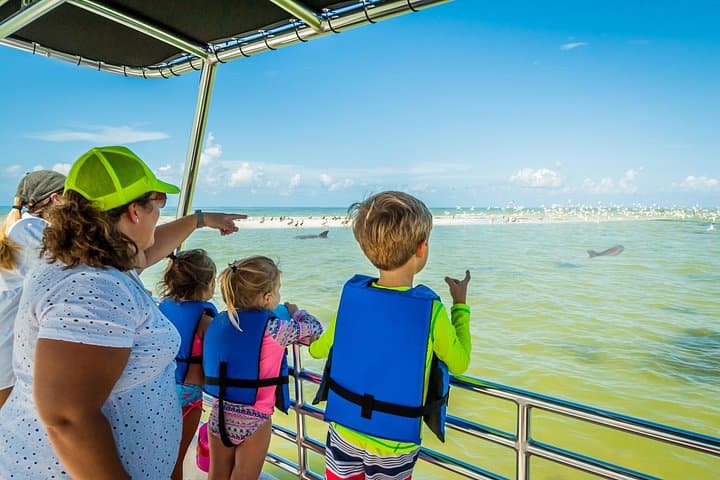
Our Marco Island Sightseeing and Shelling Tour departs from the Goodland Boat Park, in Goodland, FL. On our two hour ecotour you will…
2 hours
Prices checked
Beach
Last updated
Two miles of empty Gulf beach across Caxambas Pass, boat access only, with no shade, no water and the best shelling near Marco.
Photo: UnsplashUnsplash License
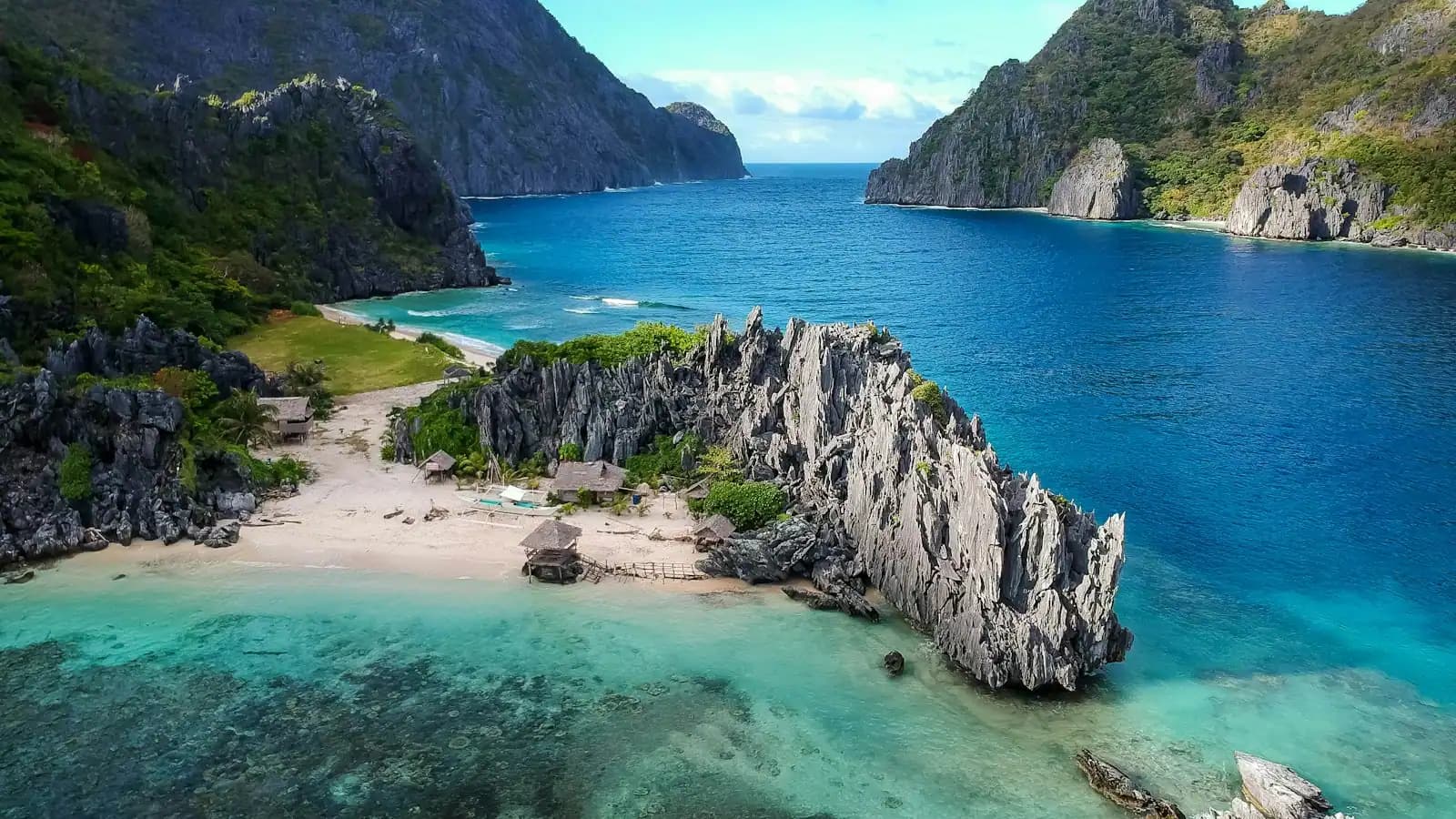
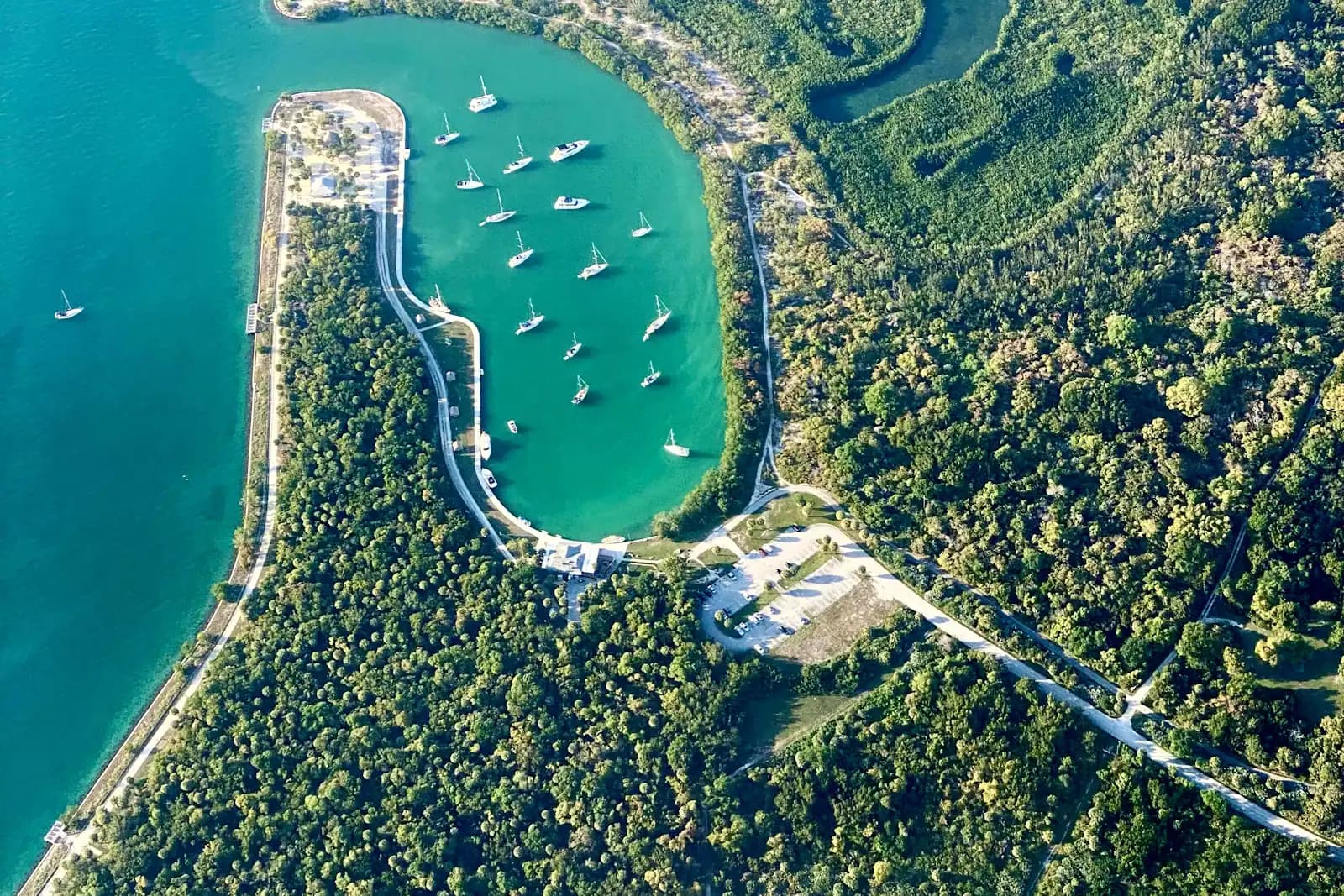
Stand on the south end of Marco Island at Caxambas and look across the pass. The low green-and-white line half a mile away is Kice Island, and it is the closest thing to genuine wilderness that a Marco visitor can reach inside twenty minutes.
Kice is uninhabited and undeveloped. No road reaches it, no dock serves it, nothing is built on it, and nobody lives there. What it has is roughly two miles of Gulf beach, a dune line of sea oats and cabbage palm, a mangrove back side, and shell lines that have not been walked over by four hundred people that morning. Marco's own beaches are picked clean daily by the crowd off Crescent Beach; Kice is picked over by whoever happened to bring a boat.
The contrast with the island you just left is the whole point. Behind you: condominium towers, a paid parking lot, a beach concession, lifeguards. Half a mile of water later: no shade, no water, no restroom, no rubbish bin, no phone signal worth relying on, and no one to help if something goes wrong. The distance is trivial and the difference is total.
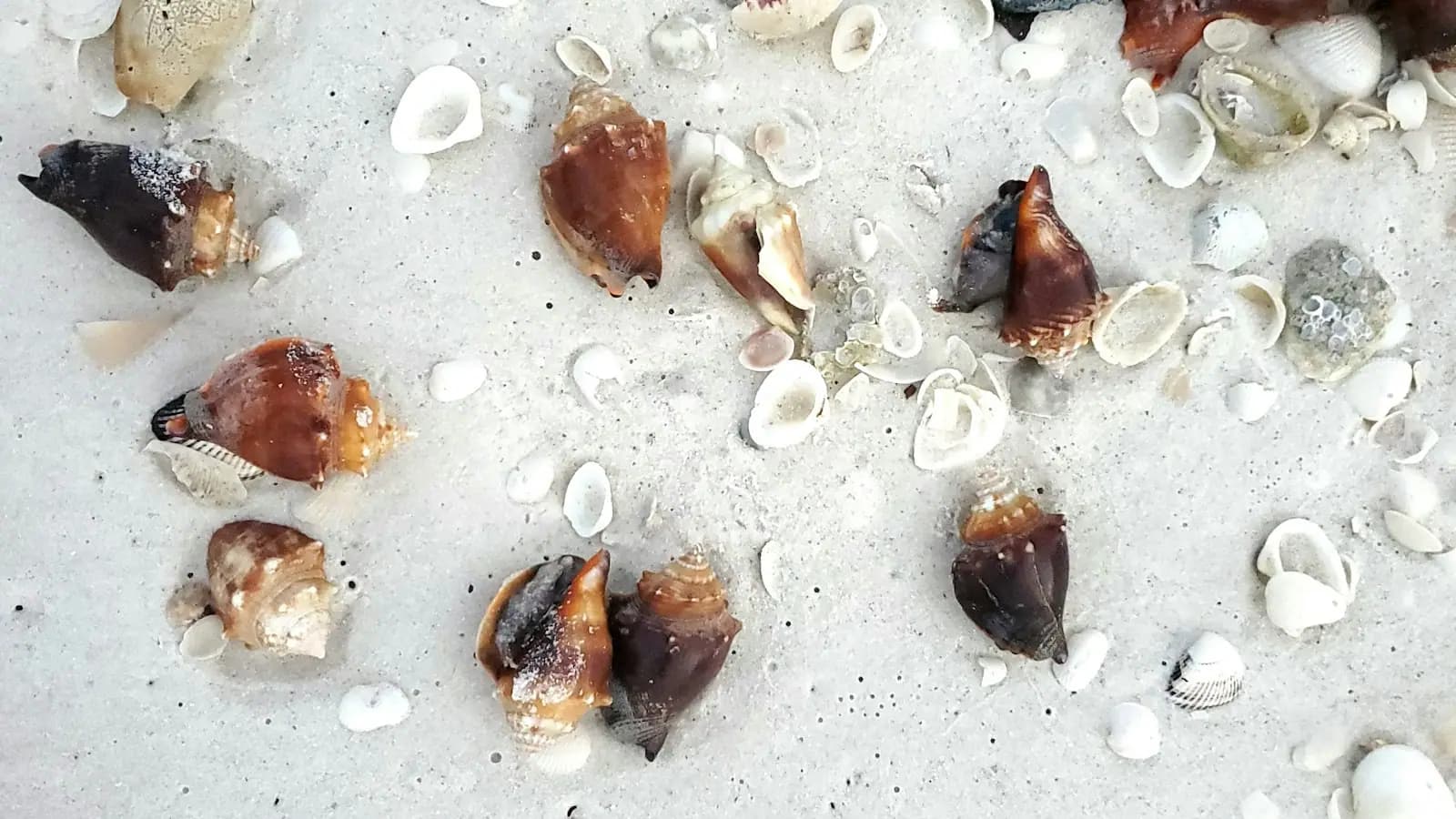
What you find on the sand depends on the weather of the preceding week rather than on luck. A winter front with a hard west wind piles shell onto this shore; a flat calm fortnight leaves a thin wrack line. Lightning whelks, Florida fighting conchs, lettered olives, cockles, pen shells standing upright in the sand, and occasionally a sand dollar bed on the flats behind the point.
The rule that matters more than any other here: empty shells only. Collier County prohibits collecting live shells, and a fighting conch with an animal in it is a living thing, not a souvenir. If it moves, put it back where you found it, in the water, the right way up.
Boat only. There is no bridge, no dock and no scheduled service.
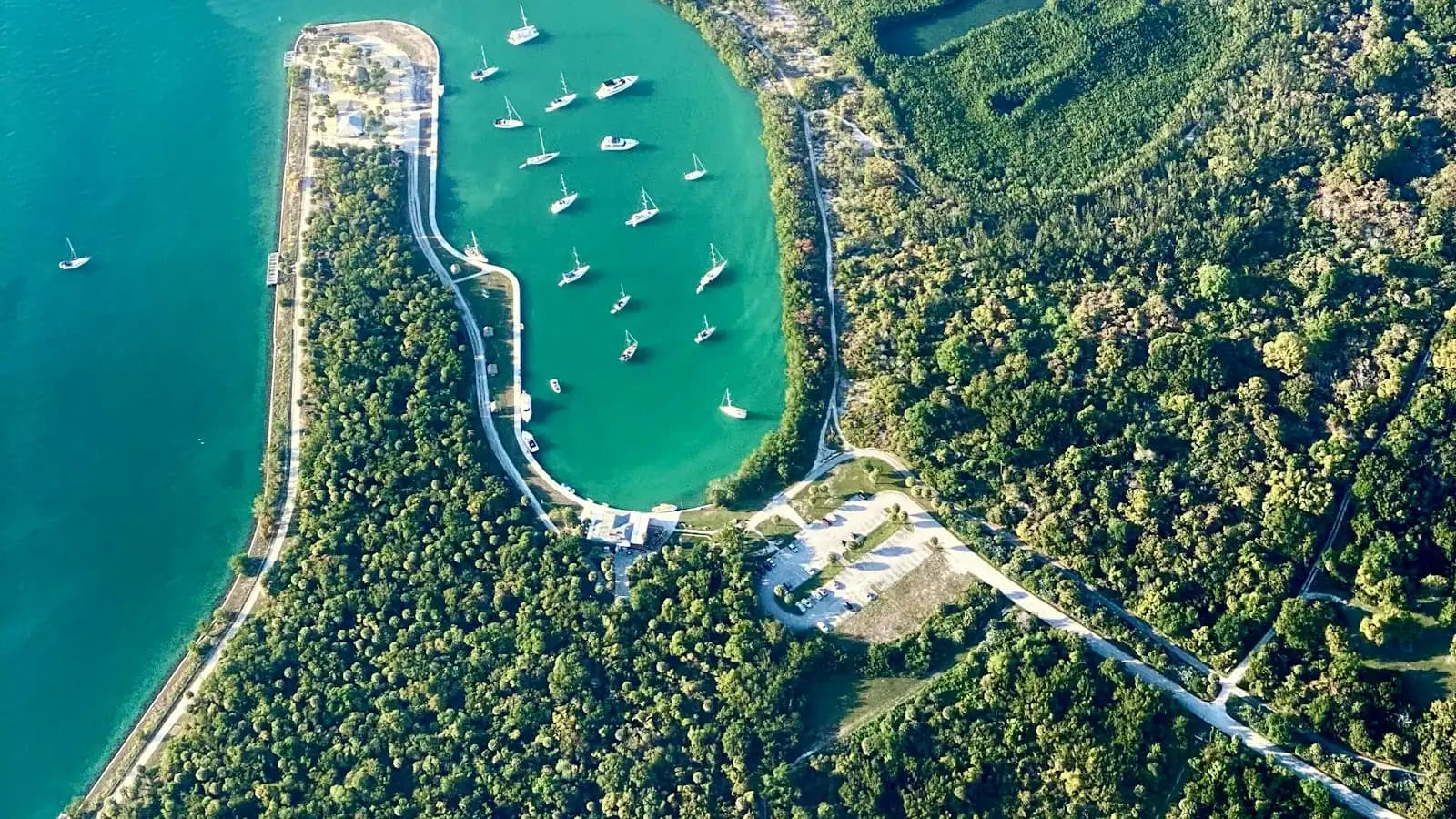
The practical launch is Caxambas Park at 909 Collier Court on Marco Island's southern tip, which has a county ramp, parking, restrooms and kayak and paddleboard hire. From there the north end of Kice is a short crossing of Caxambas Pass — about fifteen minutes by kayak on a helpful tide.
Cross at or near slack water. The ebb through Caxambas Pass runs harder than it looks, and the return leg is what catches paddlers out.
Most visitors are better served by a guided shelling trip. Charters run from Caxambas Park, from Marco's marinas and from Goodland, and a guide reads the shell lines and the tide for you. Beaching a boat here means anchoring off and wading in; there is nothing to tie to.
The door to Kice is Caxambas Pass, the inlet at Marco Island's southern tip. Caxambas Park at 909 Collier Court is the launch: a county ramp with parking, restrooms, and kayak and paddleboard hire on site. From the ramp, the north end of Kice is one of the shortest runs to a wild beach anywhere on this coast — fifteen minutes or so in a kayak on a helpful tide.
Then there is the pass itself. Caxambas is a tidal inlet, and inlets move water. On a hard ebb the current through here is faster than the flat surface suggests, and a paddler who crosses easily on slack water can find the return leg genuinely difficult two hours later. Boat wakes stack up in the same stretch.
Cross at or near slack water, not mid-tide. Check a tide table for Caxambas Pass specifically rather than for the Gulf beaches, because the timing differs. Tell someone where you are going. And if the wind is onshore and over about fifteen knots, do not go by kayak at all — go with one of the shelling charters running out of Caxambas, Marco or Goodland, which is what most visitors should do anyway.
Shelling is not a matter of walking until you see something good. It is a matter of finding the right line and then working it slowly.
Realistic expectations: lightning whelks, fighting conchs, lettered olives, cockles, apple murex, a good chance of a decent whelk if you are patient. A junonia is a once-in-many-trips find here as anywhere on this coast, and anybody promising you one is selling something.
Bring a mesh bag so the sand drains, and rinse everything before it goes in a car.
This is the section people skip and then regret.
There is no shade on Kice Island beyond the occasional palm, and none of it falls on the beach in the middle of the day. There is no drinking water. There is no restroom, no bin, no shelter, no lifeguard, no concession and no ranger. Phone coverage is unreliable and you should assume it is absent.
Take, per person: more water than you think — two litres minimum in summer — a hat, a long-sleeved sun shirt, reef-safe sunscreen, closed water shoes for the shell, and a dry bag. Take out everything you brought in, including fruit peel.
Two seasonal hazards. Shorebirds nest on open sand here in spring and summer, and their eggs are effectively invisible; stay on the wet sand below the wrack line and keep out of any posted or roped area. Sea turtles nest on this coast from May into October, and a nest looks like nothing at all, so keep off the dry dune sand entirely in those months.
If a summer thunderstorm builds over the Everglades to your east, leave. There is nowhere on Kice to shelter from lightning, and these storms move west across the islands faster than a kayak does.
For an island with nothing on it, Kice has an unusual amount of local memory attached.
The name that comes up is Joe Dickman, remembered on this coast as the man who lived out here and walked the shell beaches from Kice south past Morgan Island towards Cape Romano, collecting and selling what he found. Dickman's Point at the island's north end carries the name. The stories are the kind that accumulate around anyone who chooses to live alone at the edge of a wilderness, and they are best treated as local history rather than as documented biography.
What the stories point to is real enough. The Ten Thousand Islands were worked for a living long before they were visited for pleasure — by shell collectors, by clam diggers out of Caxambas, by fishermen out of Goodland and Chokoloskee — and Kice sat in the middle of all of it.
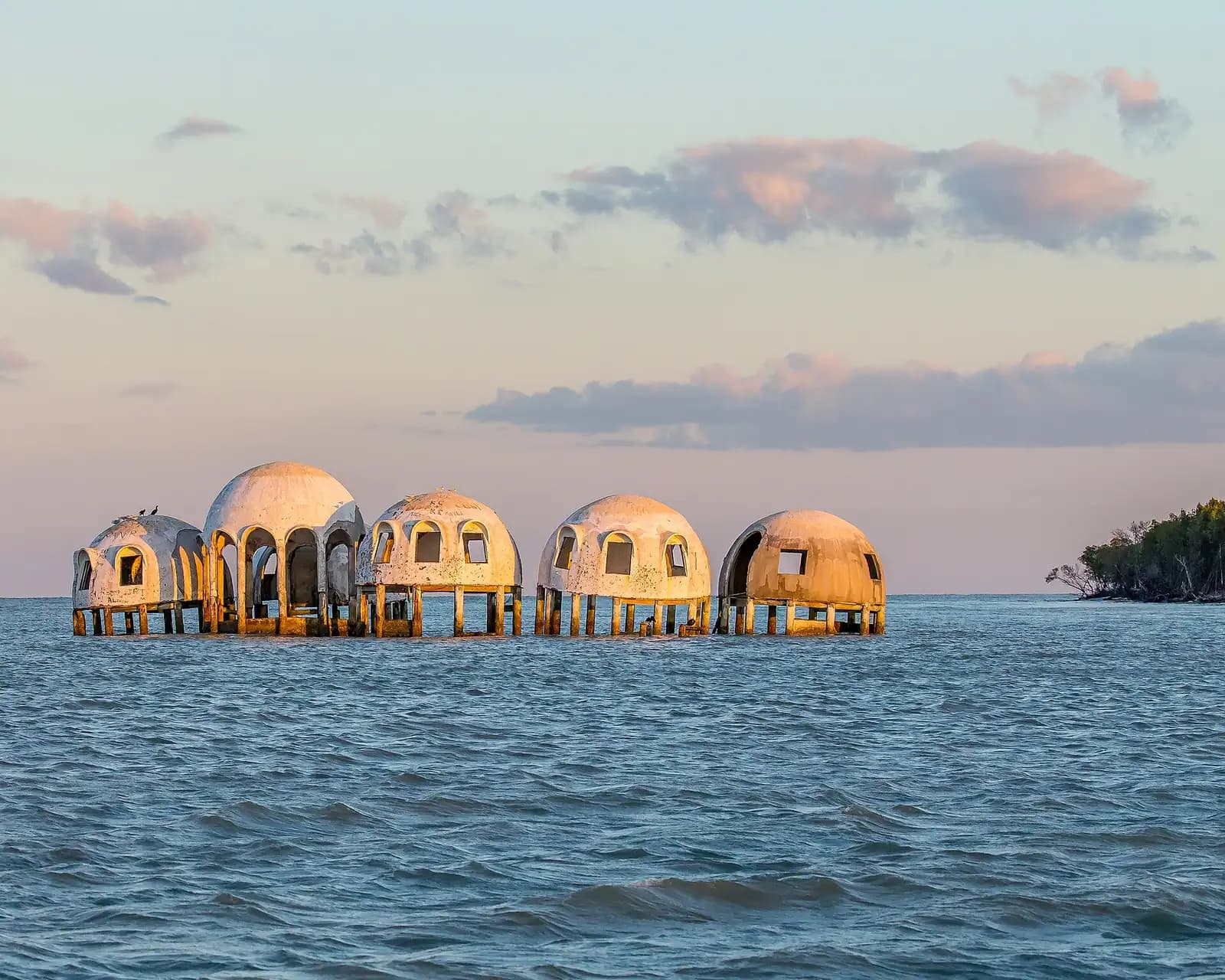
The other thing to understand is that the geography is not fixed. These barrier islands migrate, passes open and close, and the shoreline you walk is not the one on a chart from a decade ago. Cape Romano, a few miles south, is the clearest evidence: its famous dome house stood on dry land when it was built and is now rubble in open water.
Operators run these trips past Kice Island, or stop there as part of a longer route. We list what the booking data supports — not everything that mentions the name.
Some links below go to Viator, our booking partner. We earn a commission on bookings made through them — at no extra cost to you, and with no influence on what we recommend.

Private and Luxury
Our Marco Island Sightseeing and Shelling Tour departs from the Goodland Boat Park, in Goodland, FL. On our two hour ecotour you will…
2 hours
Prices checked

Low Last Minute Supplier Cancellation Rate
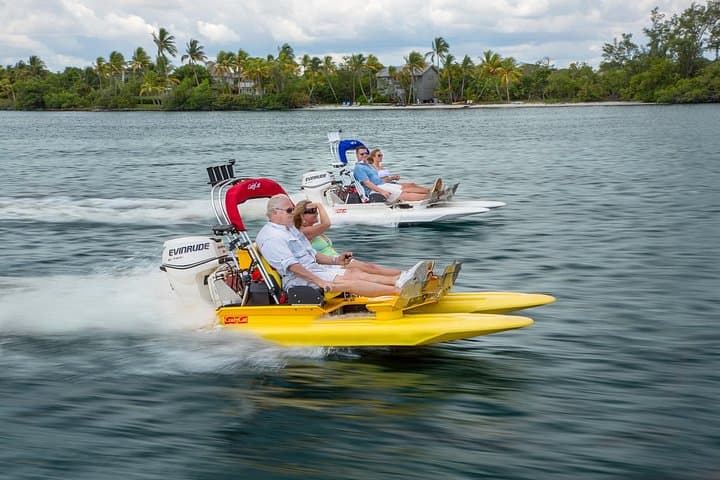
Operate your own 2 person catamaran through the winding and breathtaking waterways of the 10,000 Islands. Excitement, tranquility, thrill…
1–2 hours
Prices checked

Private and Luxury
As the top shelling company in all of Florida, we take pride in providing our guests with a truly unique and unforgettable experience. Our…
3 hours
Prices checked

Top Product
Our private excursion allows you to enjoy the beautiful waters of The 10,000 Islands without the crowds of tourists at a comparable price…
2–3 hours
Prices checked

Curated Catalog
Excited to catch some fish in Marco Island? Having logged many hours on these tides, Our Captains are prepared to put you on fish. All of…
2 hours
Prices checked

Nature and Wildlife Tours
Begin your private charter with a scenic cruise through Naples Bay and the waterways of Port Royal, home to some of Naples' most…
4 hours
Prices checked
Straight-line distances, so allow more on the road — the island is long and has one main parkway.

Marina
The county ramp at Marco's southern tip, rebuilt after Ian, and the shortest launch to Kice Island and Cape Romano.
0.5–4 hoursPark entry is free. Boat launching is charged per launch, with an annual county pass available.1.4 mi away

Beach
The furthest of the boat-only shelling beaches south of Marco, on a shoreline that redraws itself after every serious storm.
3–6 hoursFree to land on. The cost is the boat: a charter seat, or launch and fuel of your own.1.4 mi away

Landmark
The domes off Cape Romano fell in Hurricane Ian. What is left is pilings and rubble in open water, and still worth the run south.
0.5–1 hoursFree to look at from the water. The cost is the boat or the charter seat.3.7 mi away

Water feature
Marco Island's quiet back-side estuary, a foot deep over grass and oyster bar, best seen from a kayak and barely seen from land.
2–5 hoursFree. Launch and parking fees apply at Caxambas Park, and hire or a guide is charged separately.3.2 mi away
Where this place fits into a day, and the pages that plan one.

Guide hub
Marco Island has roughly four miles of Gulf-facing sand, and almost all of it is fronted by something. Condominium towers stand shoulder to shoulder…

Guide hub
Stand at the south end of Marco, at Caxambas, and look east. There is no horizon line in the usual sense. There is a low green edge that repeats…

Things to do
Marco is a boating island in a way that is easy to miss from the beach. The Gulf frontage is a crescent of sand with mid-rise towers behind it and…

Things to do
Every visitor arrives having heard that Sanibel is the shelling island, and the honest answer is that Sanibel earned it. That island sits crosswise…

Things to do
A kayak gets you into the parts of this place a boat cannot reach and a boat's engine would ruin anyway. The mangrove tunnels behind Marco are a few…

Guide
You do not need to own one or hire one. You do need to get on one, because everything that makes this island different from any other Gulf resort is offshore of it.
7 min readWyatt Coombs

Guide
The good shelling here is not on the beach in front of the towers. It is on keys with no roads, no names anyone uses, and a tide window of about two hours.
8 min readImani Brooks

Guide
Marco is the largest of the Ten Thousand Islands and the northern door into them. Behind the condominium towers is a mangrove labyrinth where a wrong turn on a falling tide costs you six hours.
10 min readWyatt Coombs
By boat only. The usual route is across Caxambas Pass from Caxambas Park at Marco Island's southern tip, which has a ramp, parking and kayak hire; the crossing takes about fifteen minutes by kayak on a helpful tide. Cross at or near slack water, because the ebb through the pass runs harder than the surface suggests. Most visitors go with a guided shelling charter from Caxambas, Marco or Goodland instead, which is the safer option.
It is among the best shelling near Marco Island, mainly because so few people reach it. Expect lightning whelks, Florida fighting conchs, lettered olives, cockles and pen shells. Go at low tide, and ideally a day or two after a winter cold front with a west wind, which is what piles shell onto this shore. Collier County prohibits taking live shells, so empty shells only — if there is an animal in it, put it back in the water.
None whatsoever. No restroom, no drinking water, no shade to speak of, no shelter, no bins, no lifeguard and no ranger, and phone coverage is unreliable enough that you should assume it is absent. Bring at least two litres of water per person in summer, sun cover, closed water shoes for the shell, and a dry bag, and carry out everything you carry in. If a thunderstorm builds to the east, leave immediately.
Do not plan on it. Kice is undeveloped shoreline with no facilities, no fresh water and no shelter, and rules on overnight use of the barrier islands in this area vary by ownership and by season, with shorebird and sea turtle nesting closures on top. If you want to sleep out in the Ten Thousand Islands, the permitted chickees and beach sites are inside Everglades National Park and are booked through the park. Check current rules rather than assuming.