Private and Luxury
Marco Island Wildlife Sightseeing and Shelling Tour (opens in a new tab)
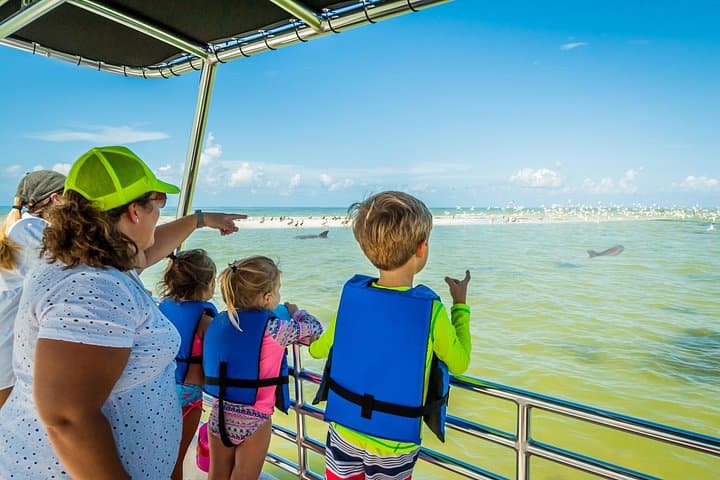
Our Marco Island Sightseeing and Shelling Tour departs from the Goodland Boat Park, in Goodland, FL. On our two hour ecotour you will…
2 hours
Prices checked
Neighbourhood
Last updated
Barron Collier's planned company town on the edge of the Everglades, still the land gateway to the Ten Thousand Islands.
Photo: State Library and Archives of FloridaPublic domain
Everglades City is a grid of streets with royal palms down the middle of them, laid out around a circle, sitting in a marsh at the end of a state road. It looks planned because it was. In the 1920s Barron Gift Collier bought an enormous share of Southwest Florida, agreed to finish the Tamiami Trail in exchange for the state carving out a county named after him, and built this town as the base camp for the work. It was the seat of Collier County from 1923 until the seat moved to Naples in 1962, and the 1928 courthouse on Copeland Avenue still stands, now serving as City Hall.
A few hundred people live here. It is not a resort and it has never pretended to be. The economy is fishing, guiding and the traffic that Everglades National Park brings, and the town's identity is tied to the stone crab fishery — the claws harvested off this coast between October and May are the reason Everglades City calls itself the stone crab capital.
For a Marco Island visitor this is the best full day out there is. Take San Marco Road east, join US-41, then SR-29 south, and you are here in roughly fifty minutes. The road ends at the water, and the water is the Ten Thousand Islands: a labyrinth of mangrove keys and oyster bars running south to Cape Sable, almost none of it built on, most of it inside Everglades National Park.
The park's presence is newly visible. The Marjory Stoneman Douglas Visitor Center opened in 2026 on the site of the old Gulf Coast centre, built on high concrete seawalls after Hurricane Irma destroyed the original in 2017 and Hurricane Ian destroyed its temporary replacement in 2022. It is the first properly permanent piece of federal infrastructure this town has had in a decade.
Come with an appetite, a full tank and no expectation of shopping.
From Marco Island, take San Marco Road (CR-92) east across the Stan Gober Memorial Bridge to US-41, turn east, and after about thirty minutes turn south onto SR-29. Everglades City is three miles down it. Allow around fifty minutes door to door — going north over the Jolley Bridge instead adds half an hour.
From Naples it is roughly an hour and twenty minutes on US-41. From Miami, about two hours west across the Tamiami Trail.
SR-29 is the only road in. It continues south through town and over the bridge to Chokoloskee, three miles further, where it ends.
There is no public transport and no scheduled service of any kind. Fuel on Marco or at the US-41 junction; do not plan on filling up in town.
Walk two blocks from the circle and the plan becomes obvious: straight streets, uniform lots, a civic building at the head of the axis, royal palms lining the approach. This is a designed town, dropped into a mangrove marsh in the 1920s by one man's company.
The reason was the Tamiami Trail. Building a road from Tampa to Miami across the Everglades had defeated the state, and Barron Collier put his own money behind finishing it. In return, the legislature created Collier County in 1923 and this town became its seat. The courthouse went up in 1928 for a recorded $24,563, which even then was not a fortune.
The county outgrew it. In 1962 the seat moved to Naples and the courthouse became City Hall, which it remains. Hurricane Wilma damaged it severely in 2005 and demolition was recommended; it was repaired instead, and in December 2013 it was added to the National Register of Historic Places.
There is no ticketed museum in the building, and you are not going to spend an hour inside. Walk the circle, look at the courthouse, and understand that the whole settlement is the artefact.
Everglades National Park's western entrance has been an open wound since 2017. Hurricane Irma destroyed the Gulf Coast Visitor Center that September; the temporary contact station that replaced it was destroyed by Hurricane Ian in 2022; for years the park's Ten Thousand Islands gateway was a trailer and a car park.
The Marjory Stoneman Douglas Visitor Center opened in 2026 to replace it, named for the writer whose work reframed the Everglades as a river of grass rather than a swamp to be drained. It is built high, on thick concrete seawalls, explicitly designed to survive the next storm rather than to be rebuilt after it — a roughly $47 million answer to two decades of losing buildings.
Published hours are daily, 9am to 5pm, with restrooms, exhibits, a kayak launch, picnic area and rangers on hand. Check nps.gov before you travel; a new facility's hours and services settle over the first seasons.
The park's concession-run Ten Thousand Islands boat tour departs from a dock in town rather than from the centre itself, and the departure address has moved during the rebuilding. Confirm where your boat leaves from when you book, not when you arrive.
The claim to be the stone crab capital rests on the fishery that has worked these waters for a century. Traps go out from the docks here, the claws come back, and the crabs — which regenerate a claw — go back in the water.
The season is fixed by the state and it is the single most important thing to know before planning a trip around it. Florida's stone crab claw harvest runs from 15 October to 1 May, closing on 2 May. Outside that window, any stone crab you are served has been frozen, and the restaurants will tell you so if you ask.
Within the season, the first weeks after the October opening and the deep winter months are when supply is best and prices are least eye-watering. Claws are sold by size and the grading matters more to the bill than anything else on the menu.
The Everglades Seafood Festival runs in February, and by 2026 it had reached its 56th year. It fills the town — road closures, live music, several thousand people in a place with a few hundred residents — and accommodation for miles around goes months in advance. Check dates before booking anything in February, in either direction.
Between the late 1970s and the mid 1980s a large part of this town ran marijuana.
The stone crab fishery was returning less, the men here knew waters no outsider could navigate, and the mangrove maze offered a thousand places to offload a mothership. They called themselves saltwater cowboys, and by contemporary accounts a nightly run could pay more than a season's crabbing.
Operation Everglades ran from 1981 to 1984. The first phase came on 7 July 1983, when federal agents blocked State Road 29 — the only road in — and worked through the town with warrants. Further phases followed. Contemporary reporting put the proportion of local adult men arrested at an extraordinary figure, and whatever the exact number, the effect on a community of a few hundred was total.
People here will talk about it, sometimes readily, more often not, and it is worth remembering that the families involved still live in these houses. It is history rather than folklore, and there are considerably better and worse ways to raise it. The relevant fact for a visitor is simply that this town's relationship with outsiders, government and the park was shaped by those years.
Fuel and cash. Fill up on Marco or at the US-41 junction. Services here are few and a card reader going down is a genuine problem.
Season. The town works between November and April. In summer several restaurants close or cut hours, the heat is severe, and the mosquitoes on a still evening are not a joke — this is one of the buggiest inhabited places in the United States.
Storm damage. Irma and Ian both hit this town hard and the recovery is uneven. Some buildings are restored, some are still shuttered, and businesses have closed permanently. Anything you read in an older guide should be confirmed by phone.
Flooding. Everglades City sits barely above sea level. King tides put water in the streets without a storm anywhere near, usually in autumn. It passes in hours but it will reroute your day.
What to book. A boat tour of the Ten Thousand Islands, an airboat ride in the shallow fresh water inland, or a fishing guide. Do not come expecting shops, a beach or a walkable evening.
Time needed. Six to eight hours from Marco, including the drive, gets you a boat trip, lunch and Chokoloskee.
Operators run these trips past Everglades City, or stop there as part of a longer route. We list what the booking data supports — not everything that mentions the name.
Some links below go to Viator, our booking partner. We earn a commission on bookings made through them — at no extra cost to you, and with no influence on what we recommend.

Private and Luxury
Our Marco Island Sightseeing and Shelling Tour departs from the Goodland Boat Park, in Goodland, FL. On our two hour ecotour you will…
2 hours
Prices checked

Low Last Minute Supplier Cancellation Rate
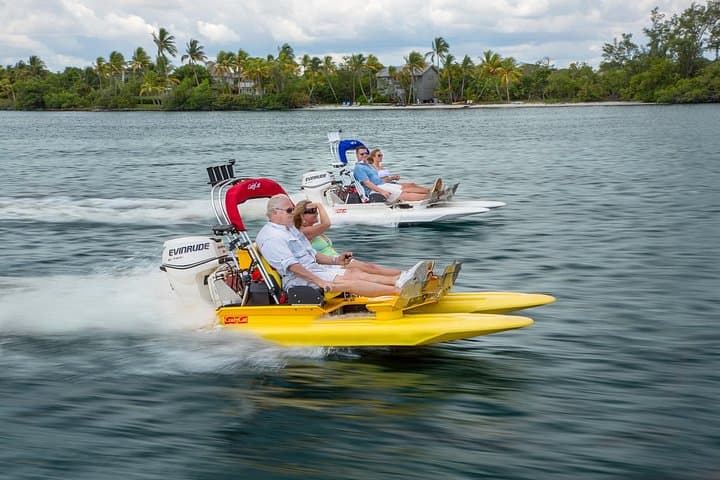
Operate your own 2 person catamaran through the winding and breathtaking waterways of the 10,000 Islands. Excitement, tranquility, thrill…
1–2 hours
Prices checked

Private and Luxury
As the top shelling company in all of Florida, we take pride in providing our guests with a truly unique and unforgettable experience. Our…
3 hours
Prices checked

Excellent Quality
We are open 7 days a week and promise to provide you with exceptional service! Paddle Naples is a family owned business that has operated…
2 hours
Prices checked

Water Tours
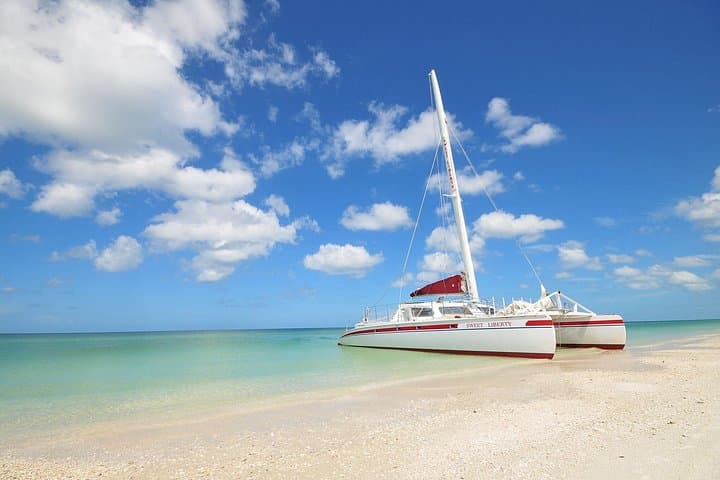
Enjoy a family favorite cruise aboard the Sweet Liberty, a 53' sailing catamaran, that can accommodate up to 44 passengers. Cruise along…
3 hours
Prices checked

Top Product
Our private excursion allows you to enjoy the beautiful waters of The 10,000 Islands without the crowds of tourists at a comparable price…
2–3 hours
Prices checked

Curated Catalog
Excited to catch some fish in Marco Island? Having logged many hours on these tides, Our Captains are prepared to put you on fish. All of…
2 hours
Prices checked

Nature and Wildlife Tours
Begin your private charter with a scenic cruise through Naples Bay and the waterways of Port Royal, home to some of Naples' most…
4 hours
Prices checked
Straight-line distances, so allow more on the road — the island is long and has one main parkway.

Neighbourhood
A 150-acre Calusa shell mound at the end of the road, twenty feet above an Everglades that is otherwise at sea level.
1.5–8 hoursFree to visit the island. The Smallwood Store charges a small admission, and boat ramps charge to launch.3.6 mi away

Museum
A trading post on stilts over Chokoloskee Bay, still stocked with what it sold, and the spot where Edgar Watson was shot in 1910.
1–1.5 hoursA small admission charge, in the region of $5 per adult, going towards the building's upkeep.3.7 mi away

Wildlife
Thirty-five thousand acres of mangrove wilderness with one land trail, one observation tower and eighteen parking spaces.
1–4 hoursFree. No entry fee and no parking charge at the Marsh Trail.10.8 mi away

Park
6,430 acres of mangrove and royal palm hammock twenty minutes east of Marco, with the last Bay City walking dredge parked by the gate.
1.5–7 hoursA small per-vehicle entry fee in the usual Florida state park band, paid at the ranger station or honour box.15.3 mi away
Where this place fits into a day, and the pages that plan one.

Guide hub
An honest warning before the list: Marco Island has almost no ticketed attractions. There is no aquarium, no theme park, no historic district with a…

Guide hub
Stand at the south end of Marco, at Caxambas, and look east. There is no horizon line in the usual sense. There is a low green edge that repeats…

Things to do
Marco is a boating island in a way that is easy to miss from the beach. The Gulf frontage is a crescent of sand with mid-rise towers behind it and…

Things to do
Marco sits at the western door of the Everglades, which is a genuine geographical advantage and a persistent source of booking confusion. The…

Things to do
Marco is a planned island. Canals, cul-de-sacs, mid-rise towers along the Gulf, a golf club, a supermarket. On paper it should be the least…

Guide
Marco sits at the wet, mangrove end of the Everglades rather than the sawgrass end. The best day out here runs east on the Tamiami Trail, not south to Homestead.
9 min readImani Brooks

Guide
On an island where the good days happen offshore, wind decides more than rain does. Here is the year as the boats experience it.
8 min readDelia Fontaine
About fifty minutes by the sensible route: San Marco Road east off Marco Island, over the Stan Gober Memorial Bridge to US-41, east for around thirty minutes, then south on SR-29 for three miles. Satnavs often route you north over the Jolley Bridge instead, which adds half an hour. There is no public transport, so you need a car or a booked tour with transfers.
Florida's stone crab claw harvest season runs from 15 October to 1 May, closing on 2 May, and the dates are set by the state's Fish and Wildlife Conservation Commission. Outside that window any stone crab on a menu has been frozen. Supply is generally best and pricing least painful in the weeks after the October opening and through the deep winter. Claws are graded by size, which affects the bill more than anything else you order.
Yes. The Marjory Stoneman Douglas Visitor Center opened in 2026, replacing the Gulf Coast Visitor Center destroyed by Hurricane Irma in 2017 and the temporary station destroyed by Hurricane Ian in 2022. It is built high on concrete seawalls to survive the next storm. Published hours are daily, 9am to 5pm, with exhibits, restrooms, a kayak launch and rangers. Check nps.gov before travelling, as services at a new facility settle over the first seasons.
Yes, if you want the Ten Thousand Islands and the western Everglades rather than a second beach day. Budget six to eight hours including the drive, book a boat tour or a fishing guide, and eat stone crab if it is in season. Do not come for shopping, a beach or an evening out — the town has a few hundred residents, limited services, and several businesses close in summer. Go between December and March.
Because it was designed rather than grown. Barron Gift Collier built the town in the 1920s as the base for completing the Tamiami Trail across the Everglades, and it became the seat of the new Collier County from 1923 until the seat moved to Naples in 1962. The 1928 courthouse on Copeland Avenue is now City Hall and has been on the National Register of Historic Places since December 2013. The whole settlement is the historic artefact.