Skip to content
Menu

We earn a commission if you book through this link. You pay the same price.

Search

Water feature

Tigertail Lagoon

Last updated

The tidal flat between the car park and the Gulf: wade it at low water, paddle it at high, and find the best birding on Marco Island.

Most people arrive at Tigertail Beach Park expecting a beach and find water in the wrong place. In front of the boardwalk, where the Gulf ought to be, there is a long shallow lagoon, and beyond it a low sandy ridge. The Gulf is on the far side of that ridge. Getting to it means wading.

The geography is recent enough that people who came here in the 1990s remember it differently. What is now Sand Dollar Island was an offshore bar that migrated landward over decades and eventually welded onto the north end of Tigertail, with the 2005 hurricane season generally credited for the final attachment. The lagoon is simply what got trapped behind it: a warm, shallow, tidal basin of sand, seagrass and shell, open at the north end and slowly reshaping itself every year.

The result is the most interesting piece of shoreline on Marco Island and the one visitors are least prepared for. It is a designated site on the Great Florida Birding and Wildlife Trail, and on a winter morning the flats hold roseate spoonbills, reddish egrets doing their staggering dance, white pelicans, black skimmers cutting the surface, and small waders in numbers that make the beach beyond look empty. Nesting areas for snowy plover, Wilson's plover and least tern are roped off in season and stewarded, and the ropes are not a suggestion.

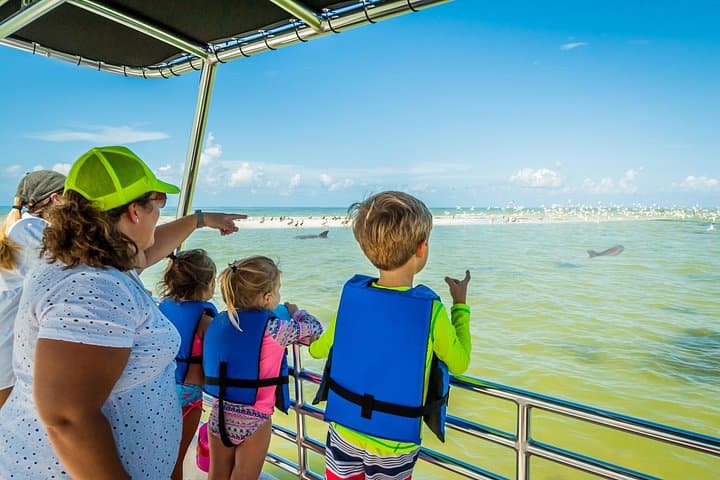
For families the lagoon is often better than the Gulf. The water is knee-deep over much of it at low tide, warm, and almost currentless at the slack, which is a gentler introduction than surf. For paddlers it is a protected loop you can do in an hour.

Two honest warnings. Restoration work in recent seasons has deepened parts of the channel, so the crossing is a genuine wade rather than the ankle-deep paddle that older guidebooks describe — check conditions at the park rather than assuming. And the bottom is shell. Bare feet are a mistake here.

Getting there and parking

Access is through Tigertail Beach Park. From Collier Boulevard, turn west onto Kendall Drive and follow it around onto Hernando Drive; the park entrance is at the end. Allow ten minutes from the Crescent Beach hotels and fifteen from the Jolley Bridge.

The lagoon is immediately in front of the boardwalk — there is no separate entrance and no other public access point to it.

Parking is paid and the lot fills by mid-morning between January and April, so come early rather than circling. There is no overflow lot and the surrounding streets are residential and signed accordingly.

By water, the lagoon opens to the Gulf at its northern end, but the entrance shoals and shifts. Small craft and kayaks manage it with local knowledge; anything with a keel should not attempt it.

Crossing the lagoon without regretting it

The crossing is tidal. Around low water it is a wade of a few minutes across a firm sand-and-shell bottom, with the deepest part usually mid-thigh on an adult. Around high water it is a swim in places, and the flow through the northern opening picks up noticeably on a running tide.

Consult a tide table for Marco Island before you set out, and aim to cross on the last of the ebb. That gives you a low-water crossing, several hours on the Gulf side, and a return before the channel deepens again.

Four things that make the difference:

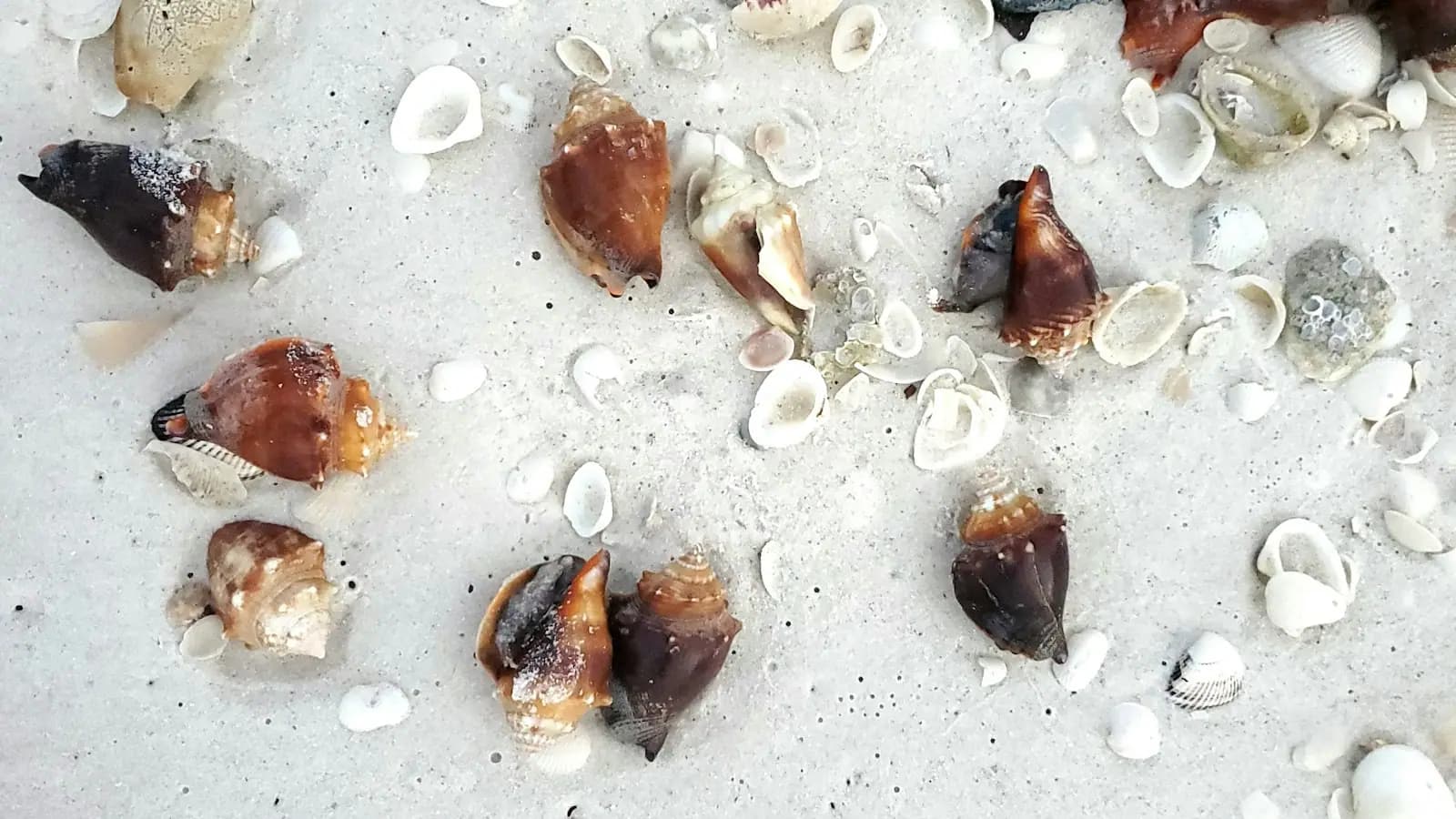
  • Water shoes, not bare feet. The bottom is broken shell and there are live sand dollars and the occasional stingray in the shallows.
  • Shuffle your feet. Stingrays bury themselves on these flats and move if you push rather than step.
  • Carry everything in a dry bag. Phones go in the lagoon every week.
  • Do not take a pushchair. It will not cross, and Tigertail does not allow dogs either.

If anyone in the group is unsteady, the lagoon shore on the park side is a perfectly good afternoon on its own. Nobody has to cross.

The birds, and why they are here

Shallow, warm, protected water over sand and seagrass is what wading birds want, and this is one of the few places on a developed Gulf island that still supplies it at scale.

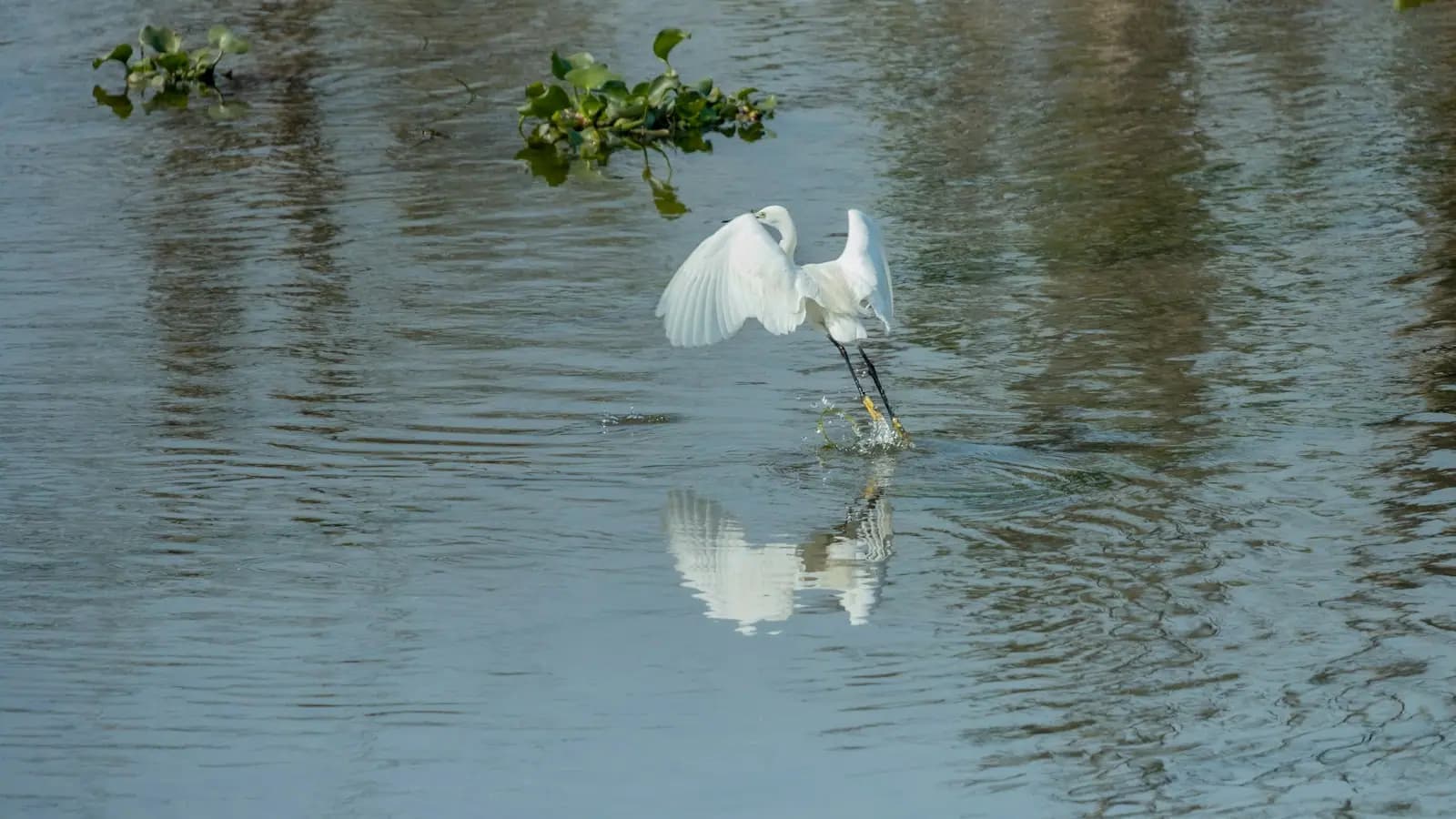
Winter is the spectacle. Roseate spoonbills sweep the shallows with that absurd bill, reddish egrets stagger and flare their wings to shade the water, white pelicans loaf on the bars in groups, and black skimmers work the surface with the lower mandible cutting a line. Ospreys fish the lagoon all year; bald eagles turn up in the cooler months.

Spring and summer bring the nesting season, and this is where the stewardship matters. Snowy plover, Wilson's plover, least tern and black skimmer all nest on open sand here, and their eggs are effectively invisible against shell and sand. Roped areas and posted signs mark the colonies. Walk around them at a distance, keep out of the marked zones entirely, and if birds start calling and lifting off you are already too close.

Bring binoculars and come at first light. By ten o'clock the flats have people on them and the birds have moved north to the quieter end.

Paddling the lagoon

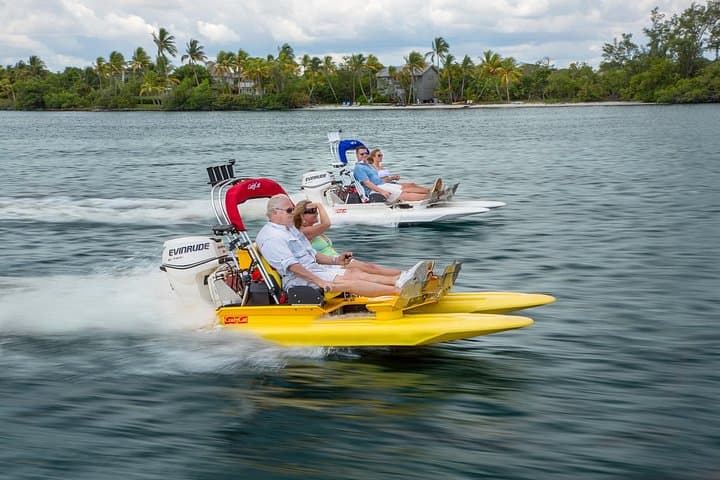
The lagoon is the best introductory paddle on Marco Island. It is sheltered from Gulf swell by Sand Dollar Island, shallow enough that a capsize is an inconvenience rather than an incident, and small enough to loop in an hour.

Kayak and paddleboard hire has operated from the park concession seasonally; availability changes, so check on arrival rather than planning around it. Bringing your own is straightforward — it is a short carry from the parking area over the boardwalk to the water.

Go at the top of the tide if you want to paddle the whole basin without grounding, and at the bottom of it if you want to combine paddling with walking the flats. Wind matters more than current: an afternoon sea breeze pushes across the lagoon and makes the return leg the hard one, which is a good argument for a morning launch.

Keep well clear of the roped bird areas and of the spits where birds are roosting, and give any resting flock a wide berth. Manatees occasionally come into the lagoon; if one surfaces near you, stop paddling and let it go past.

Parking, hours and the practical side

Access is through Tigertail Beach Park at 430 Hernando Drive, a Collier County park on the island's northwest side. It opens at 8am and closes at sunset, year-round.

Parking is charged. Expect a daily rate in the region of ten dollars, or an hourly rate, with a Collier County beach parking permit covering it for residents. The county sets and revises these figures, so read the machine rather than this page. There are roughly 226 spaces, which sounds generous and is not: between January and April the lot fills by mid-morning and the overflow options nearby are poor.

The park has restrooms, outdoor showers, a playground, a concession and picnic tables — more infrastructure than the wildness of the lagoon suggests.

No dogs are permitted at Tigertail Beach, including on the lagoon shore. That rule exists because of the nesting shorebirds and it is enforced.

Come at eight in the morning. You get the parking space, the low-angle light, the birds before they are disturbed, and the walk across the flats in cool water.

Tours that visit Tigertail Lagoon

Operators run these trips past Tigertail Lagoon, or stop there as part of a longer route. We list what the booking data supports — not everything that mentions the name.

Some links below go to Viator, our booking partner. We earn a commission on bookings made through them — at no extra cost to you, and with no influence on what we recommend.

Shared departurespriced per seat, best value for one or two

Private and small-group optionsoften cheaper per head for a family or a group of six

Near Tigertail Lagoon

Straight-line distances, so allow more on the road — the island is long and has one main parkway.

  • Low sun across a thin sheet of water lying on an exposed sand flat at low tide

    Beach

    Tigertail Beach Park

    Free

    A county park where the Gulf beach sits on the far bank of a tidal lagoon, so the tide table decides what kind of day you get.

    2–6 hoursPark entry is free. Parking is paid at the county kiosk, around $10 per day.160 ft away

  • Rows of small waves breaking over shallow offshore sandbars seen from above

    Beach

    Sand Dollar Island

    Free

    A sandbar that keeps rewriting itself off Marco's northwest shore, walkable at low water and gone from the map at high.

    1.5–5 hoursFree. The only cost is parking at Tigertail Beach Park.0.4 mi away

  • A palm-lined strip of parkland separating a beach from a row of low buildings

    Beach

    Residents' Beach

    The island's members-only beach, run by the Civic Association. Worth understanding before you drive down and find a gate.

    2–6 hoursPrivate. Annual Civic Association membership, or a temporary guest pass sponsored by a member.1.2 mi away

  • A wooden pioneer-era house with wide verandahs shaded by mature trees

    Neighbourhood

    Olde Marco

    Free

    The north-end village that was here before the canals were dredged, and the waterfront most Marco boat trips still leave from.

    1–4 hoursFree to walk. Charters, boat rentals and meals are the cost.2.2 mi away

Tigertail Lagoon: common questions

Do you have to wade across the lagoon at Tigertail Beach?

To reach the Gulf beach on Sand Dollar Island, yes. The lagoon sits between the park's boardwalk and the sandbar, and there is no bridge or path around it at the southern end. Around low tide the crossing is a few minutes' wade in water up to mid-thigh on an adult; around high tide it is a swim in places. Plenty of people never cross and spend the day on the lagoon shore instead, which is a perfectly good beach.

How deep is Tigertail Lagoon?

It varies with the tide and it has changed. Much of the basin is knee-deep or shallower at low water, but the channel you cross is deeper, and restoration work in recent seasons has deepened parts of it further. The crossing is now a real wade rather than the ankle-deep splash described in older guidebooks. Check conditions at the park on the day and cross on a falling tide rather than a rising one.

What birds can you see at Tigertail Lagoon?

It is a designated site on the Great Florida Birding and Wildlife Trail, and winter is the best of it: roseate spoonbills, reddish egrets, white pelicans, black skimmers, ospreys and large numbers of small waders on the flats. Snowy plover, Wilson's plover and least tern nest on the open sand in spring and summer, and their colonies are roped off and stewarded. Come at first light with binoculars, before the flats fill with people.

Are dogs allowed at Tigertail Beach and the lagoon?

No. Tigertail Beach Park does not permit dogs anywhere, including on the lagoon shore, and the rule is enforced. The reason is the nesting shorebird colonies on the flats and on Sand Dollar Island, which a loose dog can wipe out in minutes. If you are travelling with a dog on Marco Island, check the city's current rules on where dogs are permitted rather than assuming the beach is open to them.

Can you kayak in Tigertail Lagoon?

Yes, and it is the best beginner paddle on Marco Island. The lagoon is sheltered from Gulf swell by Sand Dollar Island, shallow enough that a capsize is a nuisance rather than a danger, and small enough to loop in about an hour. Launch at the top of the tide to avoid grounding, and go in the morning before the sea breeze builds. Hire has operated from the park concession seasonally, so check availability on arrival.